

NCAA Division II has rewritten the rulebook overnight, scrapping what the players and coaches knew after decades of eligibility guidelines in favor of a fast-moving, continuous five-year clock. Under the new age-based rule, student-athletes receive five consecutive years of eligibility. Their clock starts the moment they enroll in a full-time college or during the academic year after their 19th birthday; whichever comes first. Traditional redshirts and medical hardship waivers have essentially vanished.
The new framework eliminates the previous complex waiver process, leaving only three narrow exceptions that can delay or pause the clock: active-duty military service, official religious missions, and pregnancy. Plus, the rule applies going forward rather than retroactively — meaning student-athletes who exhausted their eligibility before 2026 cannot return for extra years.
At Point Loma Nazarene University, coaches and student-athletes are now forced to re-evaluate their strategies across recruiting, roster depth, transfer portal evaluation and player retention.
Since the clock now starts automatically after a prospective student turns 19, scouting older high school athletes, gap year students, or private school students all comes with new parameters. Because delaying enrollment no longer preserves clock time for the older recruits, coaches must decide more quickly if an athlete is worth taking on — considering there is a shortened eligibility window.
PLNU Women’s Basketball Coach, Carlotta Kloppenburg-Pruitt, is making it her goal as a new coach to not let the clock alter her foundational evaluation process.
“I don’t know if it changes where our focus is,” Kloppenburg-Pruitt said. “I think it’s always about getting the best player, the best fit for your program.”
Evaluating transfer prospects now requires tracking the players’ exact timelines down to the semester, because full-time enrollment at a junior college now triggers the start of the NCAA clock. Now, a two-year junior college stint consumes two full years of an athlete’s clock before they even step foot onto any NCAA college team.
Going into his fifth year coaching men’s basketball at PLNU, Justin Downer’s focus remains on building the overall program alignment rather than chasing specific avenues.
“To be honest, we don’t really look at it like which landscape or which environment we’re taking to recruit from,” Downer said. “We’re trying to take the best players we can get that align with our program. We prefer the high school kid. Our staff feels that the player may have developed better than maybe a transfer that we can recruit more often than not.”
With up to five full seasons of competition on the table, depth charts are tighter than ever. Current student-athletes entering the 2026-27 school year will be evaluated by the compliance staff to transition under whichever model has the best outcome, with the player agreeing on the outcome. However, moving forward, the rules will apply uniformly.
The compliance staff for all universities are the campus rule-checkers who make sure teams stay on the right side of NCAA policies. During massive rule switches like this, they break down every athlete’s eligibility history to find their best outcome, essentially allowing the players the absolute most playing time and academic perks possible.
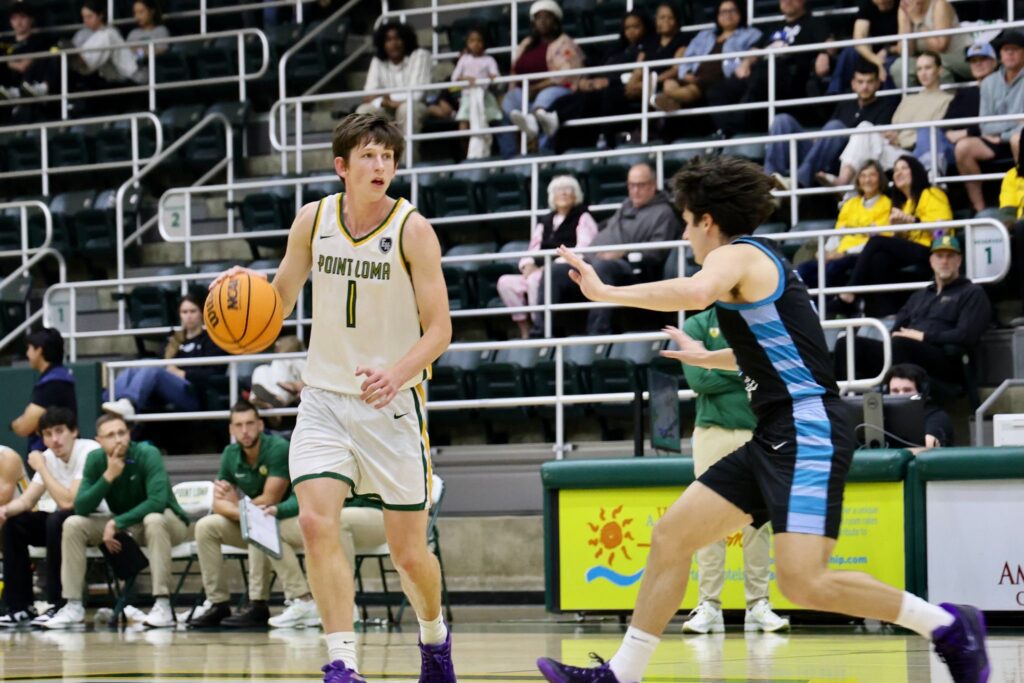
Graduate student and fifth-year basketball guard, Tyce Paulsen, sees the new rule changes as an invitation for heightened competition.
“I can’t speak for everyone, but I’m sure a lot of people will have a place to play,” Paulsen said. “For the minutes, I would say the better player will play, but it’ll be competitive.”
For student athletics, the new continuous clock is not solely about an extra year of playing time, but more of an advance on a career. Instead of graduating and moving on after the four years, players now have a built-in path to extend their athletic careers while advancing their education. This makes PLNU’s graduate school options a powerful draw for keeping experienced upperclassmen in the program.
Heading into his eighth year as head baseball coach, Justin James highlights how the benefit is not only great for his team, but for the school.
“We want to have young guys who can learn the system,” James said. “PLNU has popular graduate programs, like our biomechanics, which allow players who want to come here to go into a master’s program. That gives us the bigger benefit of upperclassman play.”
Ultimately, the new five-year clock forces a modern balancing act across the athletic system. While coaches navigate compliance deadlines and shifting roster dynamics, the new rules are placing more power in the hands of the athletes. For PLNU, blending competitive continuous playing time with higher education ensures that the Sea Lions are built not just to win, but to set their players up for long-term success on and off the court.
