

“If I felt less, I could be capable of so much more. But I will not apologize for my sincerity.”
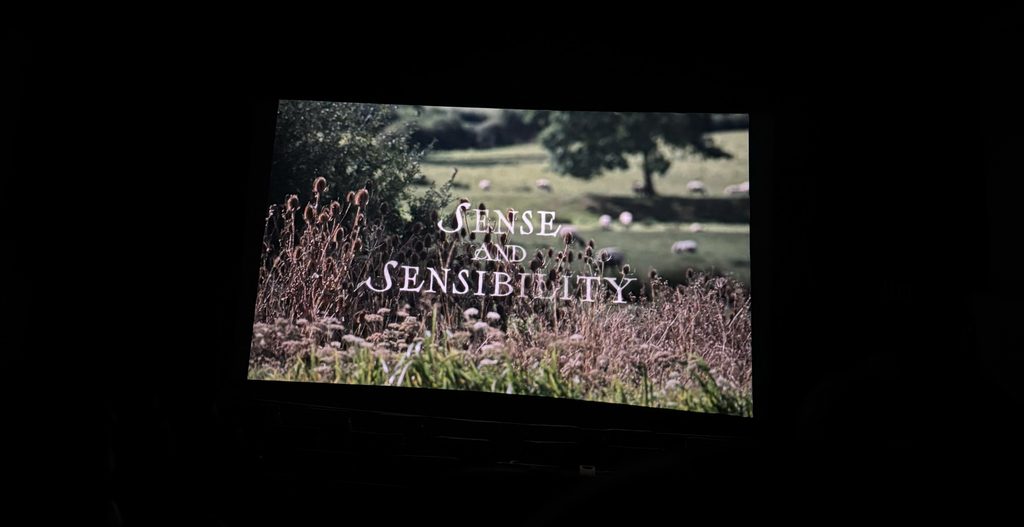
This line directly reflects the core theme of Austen’s first published novel, “Sense and Sensibility,” published in 1811. While this quote is not written in the novel, it appears in the new film adaption, released on Oct. 16, 2026.
The 2005 film adaptation for Austen’s second published novel “Pride and Prejudice” is considered a classic, ranking #3 on Letterboxd’s list of the Most Obsessively Rewatched Love Stories, earning four Academy Award nominations and two Golden Globe nominations. Being born in 2006, I never got the chance to see it in theaters, but with the amount of times I have watched it on streaming services, I probably have accounted for every single person who was able to see the film.
But seeing a film in a dimly-lit theater with friends makes a movie-watching experience 10 times better. At least it did with the new adaptation of “Sense and Sensibility.”
The film follows the lives of two of the Dashwood sisters — Elinor and Marianne — and their contrasting personalities when it comes to love. Elinor is the one with sense, making sound judgements and concealing her feelings, while Marianne has sensibility, driven by her emotions.
Both adaptations, the 2026 film “Sense and Sensibility” and the 2005 film “Pride and Prejudice,” include historical inaccuracies, with the dresses and hair styles incorrect in “Pride and Prejudice” for the time period. Similarly, the styles of dance in “Sense and Sensibility” had contemporary movements, lifts, and waltzes — styles that were not common in London of the 1790s where the story takes place.
However, the lighting of “Sense and Sensibility” is one period-realistic feature, using natural light from windows to mimic the sunlit days of England and candlelit scenes in the night to emphasize the dim, shadow-heavy nights.
Both films exhibit the countryside-esque England, with rural lush scenery and similar styles visually and tonally. While Jane and Elizabeth work to bond as sisters, despite their different personalities, this is seen as more of a supporting plot in “Pride and Prejudice.” In contrast, the sisterhood between Elinor and Marianne in “Sense and Sensibility” is more of a leading narrative. The sisters display a close relationship while having moments of confrontation, as seen with the memorable quote from Marionne to Elinor: “I conceal nothing and you reveal nothing.”
I felt the casting for this adaptation was well-done. Fiona Shaw, who played Mrs. Jennings, had the theater laughing every time she spoke. She captured the good-humoured, outspoken nature of the character. The supporting characters also felt personable, becoming more than just a stereotypical late 18th-century Englander.
I think the deeper symbolism is truly what makes “Sense and Sensibility” a stronger pick than “Pride and Prejudice.” After John Willoughby’s betrayal to Marianne, leaving her to marry a rich heiress Miss Sophia Grey, Marianne runs out into the rain. Following this, the music intensified and filled the audience with a sense of turmoil and dread, abruptly interrupted by a pack of hunting dogs running past her.
While intense, the scene reflects the beginning of Willoughby and Marianne’s relationship and the end of said relationship. Willoughby first meets Marianne after she has fallen and sprained her ankle, holding a hunting gun and accompanied by a dog. Later, the hunting dogs run past her after his betrayal, reflecting the hunter catching its prey, stripping her of her hope and leaving her vulnerable.
Both films depicted the final love confession in deeply emotional, cinematic climaxes. While “Pride and Prejudice” gave us a disheveled Mr. Darcy walking through the misty field at dawn to confess his love, “Sense and Sensibility” gave us Elinor running up and down hills to reach Edward Ferrars after realizing he was no longer engaged to another.
“Sense and Sensibility” holds a more realistic storyline in both the novel and film adaptation than “Pride and Prejudice.” While Austen’s second novel focuses on viewing someone past their first impressions, her first novel focuses on deep, emotional realism and the line between cold rationality and the indulgence of deep-routed feelings.
The film was a pleasure to see in the theater, and an adaptation I felt adequately showcased the nature of the novel despite certain inaccuracies in dance and the gun duel scene between Colonel Brandon and Willoughby — which does not happen in the novel.
Similar to how the 2005 “Pride and Prejudice” film is a timeless watch, I have a feeling that the 2026 “Sense and Sensibility” film will end up the same.

 Adee Tulcan
 Grace Chaves