
After finishing a refreshing drink from Bobby B’s, I often find myself facing the dilemma of where to throw it away. Is the plastic technically recyclable? But the recycle bin says only cans and bottles, and this is neither, so where does it go? Are my efforts to be green being recognized, or will my cup just be another piece of plastic in a dump?
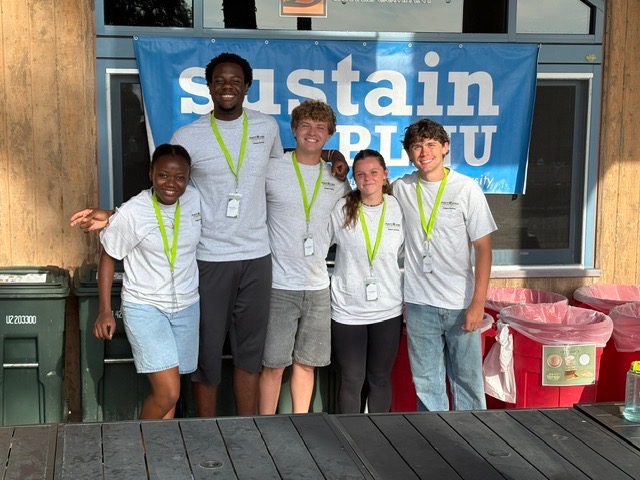
To tackle this issue, Point Loma Nazarene University’s Sustainability Department has made this school year’s focus be primarily on waste diversion and preventing as much trash from being dumped into landfills as possible. In July of this year, PLNU entered a pilot program with the non-profit organization, Plastic Beach, focused on reducing plastic waste. The program is a short-term trial to test Plastic Beach on campus.
Bekah Van Bruggen, the administrative assistant to the assistant vice principal of facility operations and campus planning, explained how the collaboration came to be.
“We have been trying to narrow our sustainability focus for the year,” Van Bruggen said. “I went on a tour at Petco Park, and [Petco Park employees] were talking about how they work with a company called Plastic Beach that collects soft plastics and turns it into decking that they use at the park. They said they do this with other organizations in San Diego, so I applied.”
Many San Diego-based organizations, such as the San Diego Zoo, The Rady Shell, San Diego International Airport and other universities, also work in collaboration with Plastic Beach to recycle plastics into reused items.
“We meet quarterly with these organizations and share ideas about how to divert waste,” Van Bruggen said. “It’s been amazing.”
According to a statement from Plastic Beach, they hope to educate people about plastic recycling and inform them about how plastics can be turned into new products. This effort aims to promote sustainability in daily lives.
The organization specifically collects and recycles high- and low-density polyethylene plastics — meaning if you can stretch it with your thumb, then Plastic Beach can most likely recycle it.
Van Bruggen also recounted the first interaction with Plastic Beach during Welcome Week in August.
“We had bags at each dorm with students moving in,” Van Bruggen said. “On that Tuesday, we had a sustainability ambassador stationed at the recycle bin with the Plastic Beach bag, and as parents or students were bringing out boxes stuffed with plastics, we were breaking them apart and stuffing the bags with soft plastics.”
During this first trial run, a total of 93 pounds of soft plastics were collected and diverted from landfills.
Currently, Plastic Beach receptacles are located in each dorm hall, the Student Life and Formation office and the Biology department’s laboratory spaces. The Sustainability Department hopes that students will place their plastics into these bags instead of dumping them into the larger trash bins.
Macie Allen, a fourth-year biology-chemistry major and secretary of the Students for Environmental Awareness and Action Club, expressed her excitement about the new developments made by the university.
“I think investing in recycling and sustainability education is a great first step towards making our campus more sustainable and environmentally friendly,” Allen said. “I’m excited to see the way that Point Loma invests in sustainability in the years to come.”
The Sustainability Department will track how much waste has been collected at these sites in an effort to understand how much plastic waste is being recycled, as well as promote changing habits with current waste and organic waste receptacles throughout campus to ensure items are placed into the proper waste receptacle.
“Republic Waste Management is who does our trash and recycling on campus,” Van Bruggen said. “In Bobby B’s and Point Break, we will be increasing our efforts to have three-stream waste bins and have communication about where our trash goes.”
Trash bins with clearly labeled and photographed items that students encounter will be put onto posters created by Republic to properly inform students and change habits.
The pilot collaboration with Plastic Beach ends in January of 2027. To learn more about sustainability on campus, @sustainplnu on Instagram is where much of the Sustainability Office’s information is communicated.

 Kate Williams