

I grew up with Rick Steves’ voice filling my childhood home and his travel books lining our shelves. Most of those books are still on our shelves today, though many have gathered dust since it’s been a while since anyone in my family has traveled internationally. But that’s the thing with Steves — he traveled when others of us couldn’t.
I remember being enthralled with all the castles and sprawling hills in “Rick Steves: Europe.” My family couldn’t afford a trip to the United Kingdom, but the way Steves brought these places to my home through his show and books made it feel like I was there.
While I was home for spring break, I skimmed through one of my dad’s old Rick Steves travel books, because I just heard the craziest announcement: My college would be hosting this renowned author for the Writer’s Symposium.
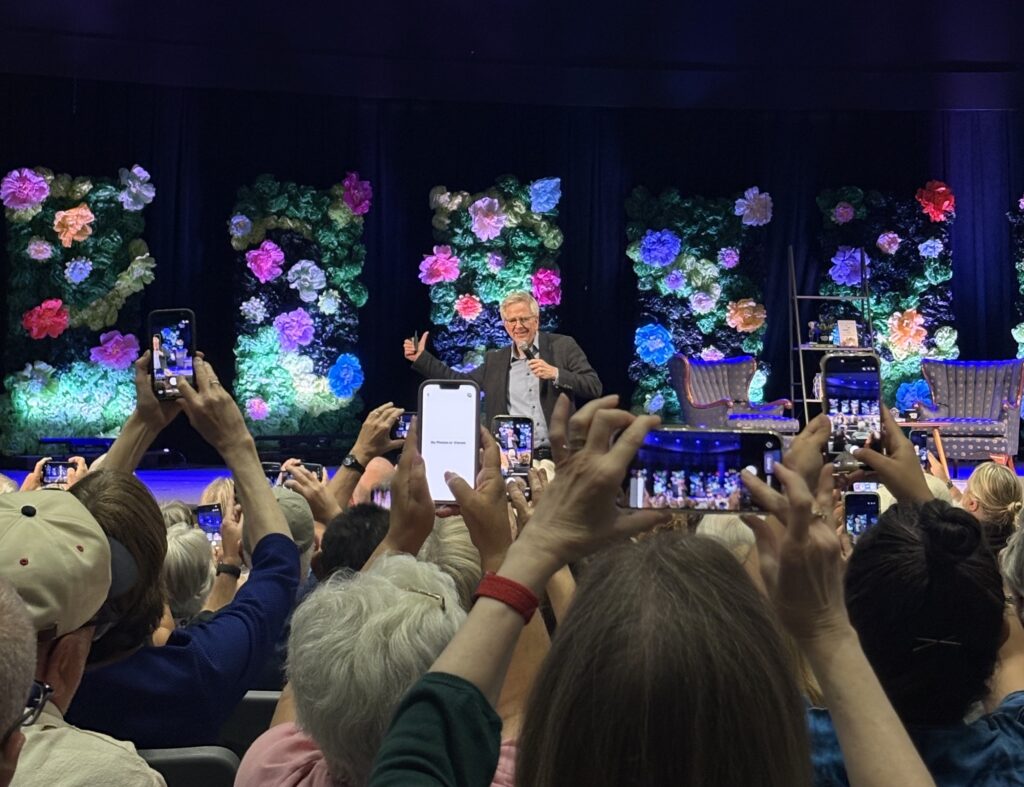
On April 24, Steves spoke to over one thousand students and guests at Point Loma Nazarene University’s Brown Chapel. Flipping through a slideshow and sharing stories from his adventures, Steves took all of us on a journey.
“We’ve all got to live in the moment,” Steves said. “And I’m going to take you on the Hippie Trail.”
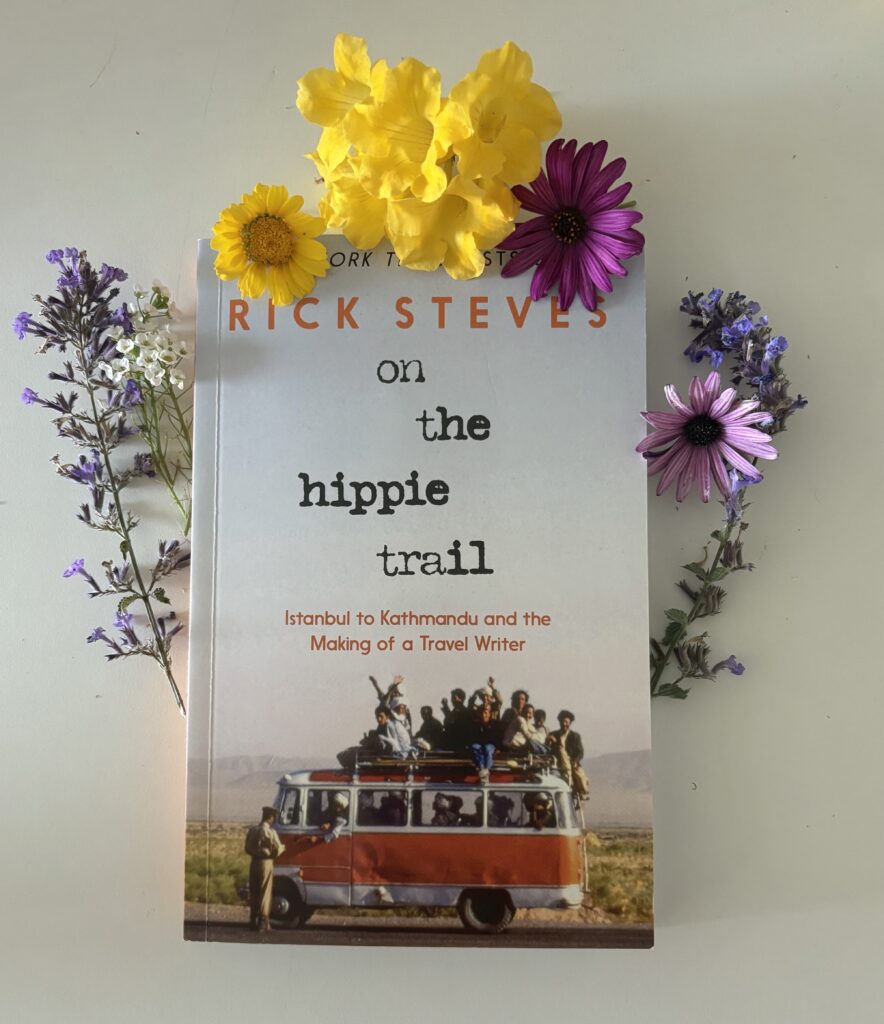
Steves’ new book, “On The Hippie Trail,” has been years in the making. He started traveling when he was 18 years old, and filled notebooks with “magic moments” from his travels. He said that journaling was something he needed to do to capture these moments so he wouldn’t forget them.
That’s how his new book was born.
From Turkey to Nepal, “On The Hippie Trail” chronicles Steves’ backpacking adventures in 1978. Containing edited selections from his travel journals, both Steves’ talk and book explore the places that changed his life.
Something that stood out to me about the talk was that, more than anything, Steves highlighted people over places. While he did talk about some of his favorite things about the scenery in cities like Kathmandu, Nepal, he shared more stories about the people he met on his travels.
One of my favorite stories he shared was from a time he had lunch with a professor in Afghanistan. Once the professor found out Steves was American, he said, “A third of the people on this planet eat with spoons and forks like you. A third of the people eat [with] chopsticks, and a third of people [eat] with their fingers like I do. And we’re all civilized, just the same.”
Steves continued to emphasize our shared humanity throughout the night, telling story after story of how the people he’s met have changed his worldview. The world needs more kindness, and Steves said that we get to be the change.
“You, as a society, have a choice to build walls or bridges,” Steves said. “Bridges bring the world together.”
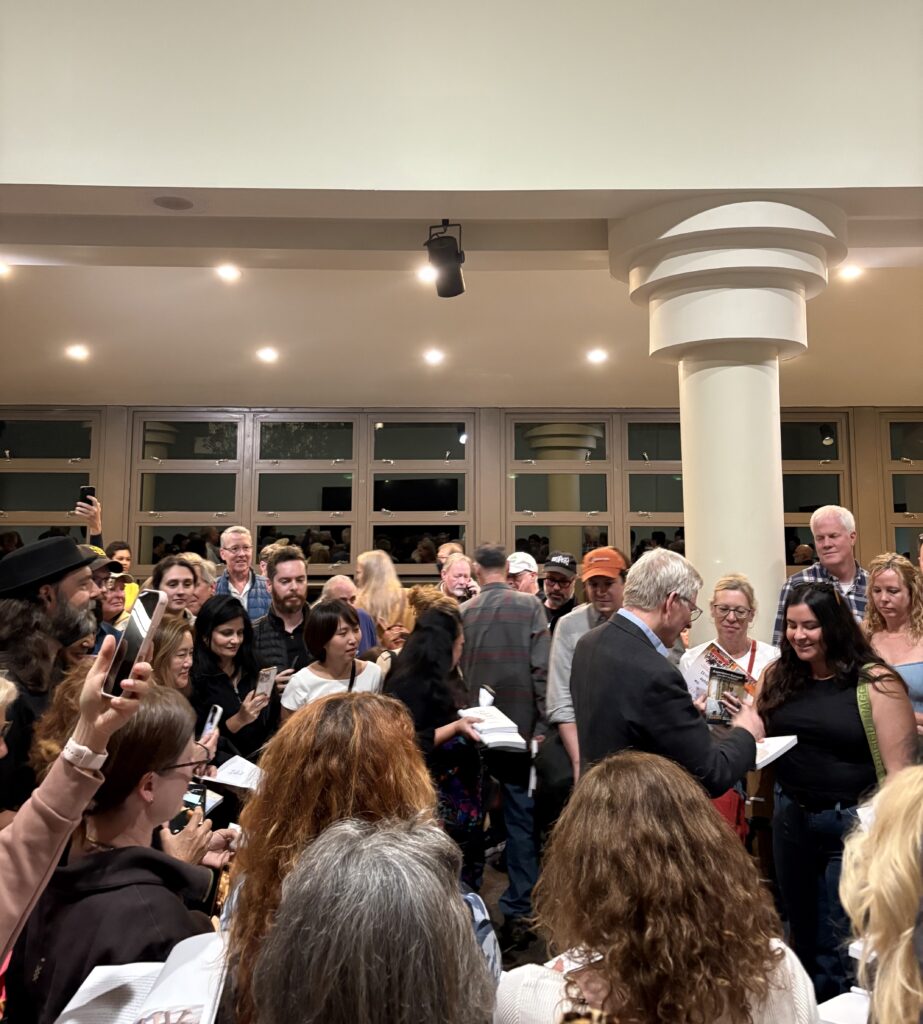
After the talk came the long-awaited book signing. Only a few minutes after he got off the stage, Steves made his way to the Brown Chapel lobby, where swarms of people were waiting to get his autograph.
He stood in the middle of the crowd, going clockwise around the massive circle to sign books. The kindness he talked about in his lecture is something he embodied as he took the time to look every person in the eye and exchange a smile. He took a selfie with a fan and showed off an old copy of “Europe in 22 Days” that someone had brought.
When it came time for him to sign my copy of “On The Hippie Trail,” he scribbled his signature, looked up at me with a big smile and said, “There ya go!”
As I left Brown Chapel and walked back to my dorm, I kept thinking of another story he told during his talk. He said that while he was in Herat, Afghanistan, he saw an undying community — everyone relied on each other. And perhaps we got a glimpse of that kind of heartfelt community at the Writer’s Symposium. We were simply lost in the stories, side by side with both friends and strangers.
I hope we always lose ourselves in the power of storytelling and choose to look at every stranger with a smile.

 Grace Chaves
  Adee Tulcan