

Edmund Cheng, a Point Loma Nazarene University chemistry professor hired last year, has been arranging how he hopes to step into his newfound role as both an instructor and researcher for the university’s Summer Research Program.
Participants within the program get to spend eight to 10 weeks researching a subject under the mentorship of a professor, amassing more than 800 hours in either the chemistry or biology department.
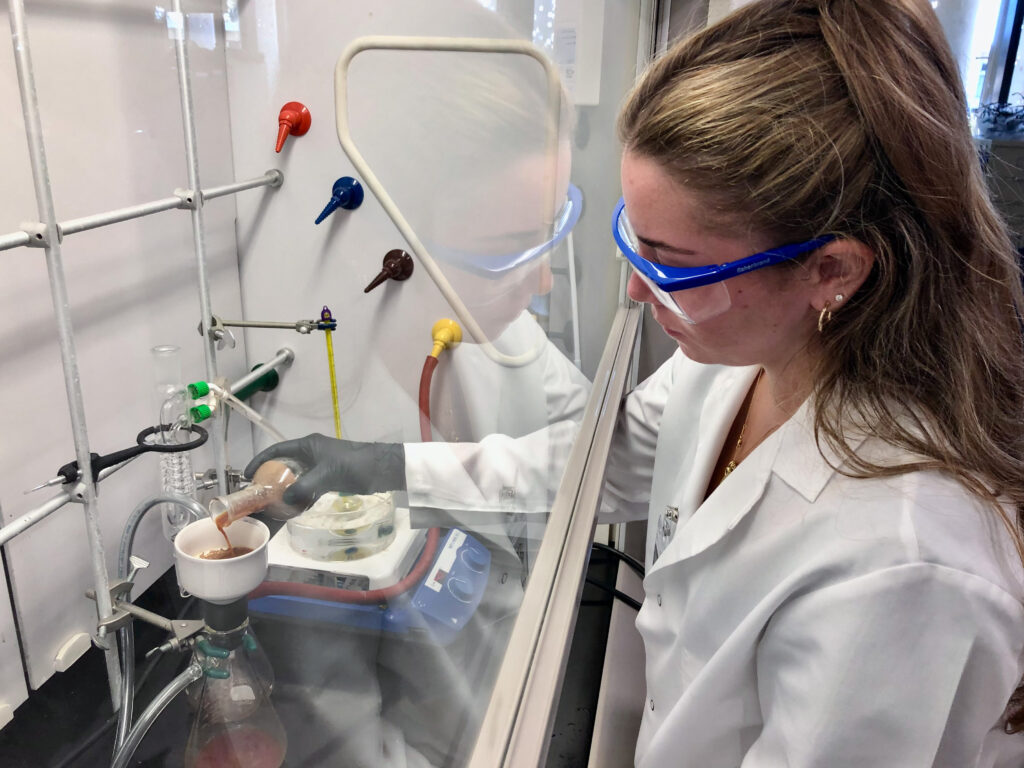
Growing up in Hong Kong, Cheng was introduced to chemistry through reading science books cover to cover and asking questions rooted in spiritual thought.
“I’ve always been interested in science,” Cheng said. “I think my journey as a scientist is very tied in with my journey as a Christian. Very early on, I had questions on how the world came to be.”
After graduating from high school, Cheng studied abroad at the University of Oxford and decided to pursue his doctorate in the United States at Northwestern University.
“I was intrigued by the process in finally understanding how things come to be, but also why things come to be,” Cheng said.
Cheng is a polymer chemist, meaning he focuses on creating and studying materials made of large chains of molecules. These materials, called polymers, are all around us. As seen in things like plastics and clothes, to high-performance car parts and medical products.
Cheng designs polymers that are inspired by DNA, the building blocks of life, and one of nature’s most fascinating molecules, he said. By incorporating the basic components of DNA into synthetic materials, he can create polymers, including the potential for medical drug delivery and adhesives stronger than super glue.
Working closely with a small team, he said, has been one of the highlights of Cheng’s research experience.
“I love my four research students I have. They are all very dedicated,” Cheng said.
Ashleigh Meltz, a third-year biology major, has been working with Cheng during the spring semester and plans on continuing the research this summer.
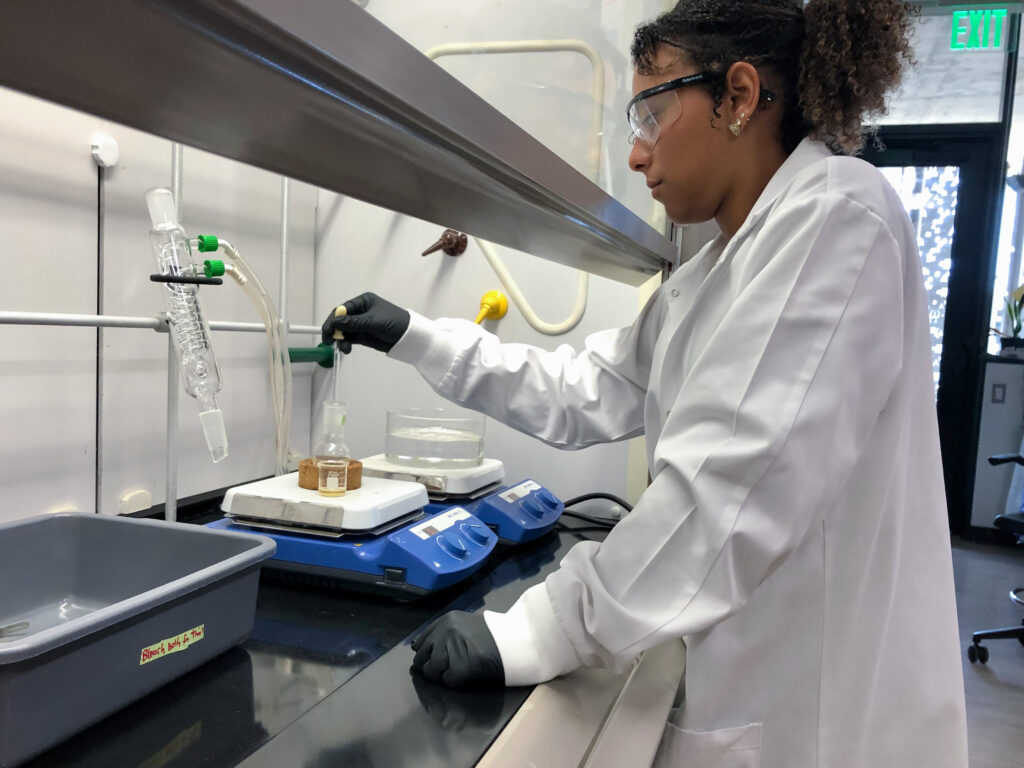
“Coming onto an organic chemistry lab team as a biology major is definitely intimidating, however I couldn’t be in better hands than Dr. Cheng,” Meltz said. “He has been such an incredible mentor and leader for our team, and truly models everything I aspire to represent as a scientist, a leader and a Christian.”
Through research, Meltz has found a love and appreciation for chemistry and the pursuit of science.
“The research we do is both challenging and meaningful, and it has pushed me to grow not only as a scientist, but also as a person,” Meltz said.
Beca Silva, a third-year applied health science major, found a rekindled interest in the laboratory space.
“I used to be the student who didn’t like labs at all; I found them boring and not very interesting,” Silva said. “But keeping an open mind and being willing to be surprised is important, because research can completely change how you see science.”
With the unexpected challenges that come with research, Silva said she learned to adapt when experiments don’t go to plan and must learn new techniques to overcome hurdles.
Silva said she sees each experiment, whether successful or not, as an opportunity to improve.
“Every day in the lab teaches me something new, and I’m looking forward to growing even more this summer,” she said.

 Emily Jones
  Grace Chaves