

Point Loma Nazarene University volunteers returned from Mexico physically exhausted but spiritually renewed from a week of construction work in Tijuana. Despite ongoing concerns about the Mexican government conflict, the annual Spring Break Build continued.
Since 2011, the build has sent students, faculty and staff to Mexico in the spring to serve through construction. This year, about 30 participants built Iglesia Restauración, a church in Tijuana, with local leaders and Lazarian World Homes.
This trip, from March 10-14, was led by Jeffrey Jimenez, the director of Border Engagement Ministries, who helped organize the build and guided students throughout the week.
“My role is to make sure everyone has a place to serve,” Jimenez said. “We want students to not only build something, but to be part of something bigger than themselves.”
The group stayed in Tijuana for a week, traveling each day from their hotel to the build site, where they worked alongside local leaders, Nazarene partners and volunteers. Students said that although the work was physically demanding, the experience was rooted in both service and community.
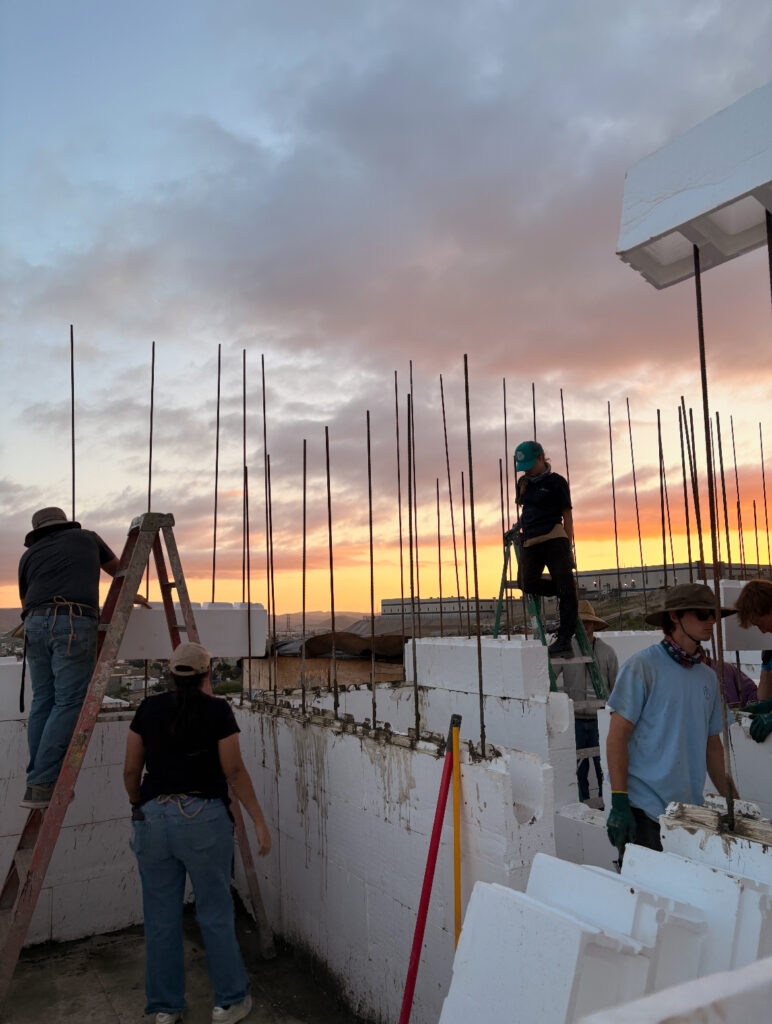
When the crew arrived, only the foundation had been laid. By the end of the trip, they had built walls using large foam blocks filled with concrete and installed most of the roof structure and electricity.
Jack Aby, a fourth-year biology major, said he felt secure despite high tension following Mexican drug cartel leader El Mencho’s death.
“I’m not sure how everyone feels about the Mexican government and their war, but I felt perfectly safe doing my purposeful mission in Tijuana,” Aby said.
Johnny Merriol, a second-year Christian studies major, worked on the truss team, helping build the wooden framework for the roof.
“At the end of the week, you feel spiritually renewed, maybe physically tired, but it’s worth it,” Merriol said.
Each day followed a steady rhythm: early mornings, long hours of labor, shared meals and daily devotionals. Aby described the routine as both active and meaningful.
“We worked all day, had meals together and ended with devotionals,” Aby said. “It was a very purposeful trip.”
Students didn’t just work alongside each other; they also built relationships with faculty, staff and community members they wouldn’t typically interact with on campus.
McKenna Kipp, a third-year social work major, said those relationships became one of the most meaningful parts of the experience.
“It was really cool because we all bonded through the hard work,” Kipp said. “You get to hear people’s stories and connect with people you normally wouldn’t and they have so much wisdom to share.”
Kipp said communication often required patience and flexibility, as many of the seminarians from Tijuana primarily spoke Spanish.
“It challenged me to be slower to listen and more observant … and to see the unity of Christ across different languages,” Kipp said.
By the end of the week, students had built a physical structure. Kipp said the church is intended to serve the community as a place for worship, connection and support for residents who previously gathered in temporary spaces.
For Darma Mortimer, a third-year nursing major, the impact of the trip extended beyond the construction site.
“It resets your perspective,” she said. “It reminds you what’s important: loving people, serving others and being present.”

 Olivia Roberts