

Editor’s Note: Carson Dillon is a student in COM4090: AI Communication, Literacy & Ethics.
Point Loma Nazarene University’s Communication Department introduced a new course this semester focused on artificial intelligence, teaching students how to use AI tools and develop literacy skills and ethical frameworks around the rapidly advancing and increasingly pervasive technology.
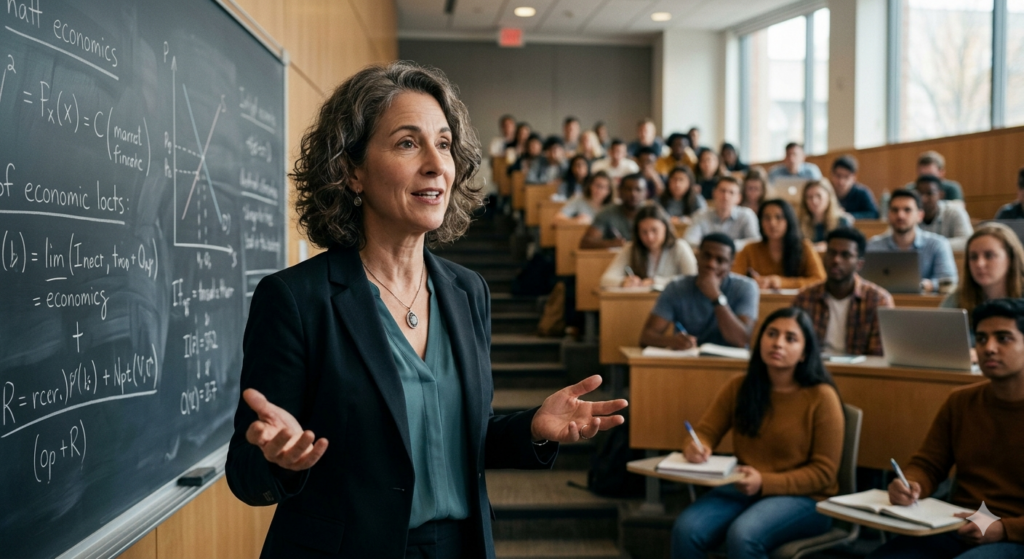
Taught by James Wicks, professor of media and film studies, this special studies course — titled COM4090: AI Communication, Literacy & Ethics — was developed by Wicks and his colleagues in response to the unprecedented growth of artificial intelligence and the increasing need for AI-focused education within the humanities.
“AI is being studied across numerous college campuses already in business and computer science departments, and I think humanities programs can offer a really interesting insight into AI usage due to our centuries-long tradition in ethics and communication studies,” Wicks said.
Throughout the semester, Wicks and his students have read numerous articles on the development of artificial intelligence, hosted guest speakers from various campus departments and tested out AI software systems and applications, namely NotebookLM, Google’s Gemini, ChatGPT and Wispr Flow. The class dives into both the positive and negative sides of artificial intelligence, discussing ways AI can be useful while also acknowledging ethical concerns like privacy issues and deepfake technologies.
“I think that there are some real-time moments in the class where we reel by the harmful impact of AI,” Wicks said. “It’s important that we understand the positive and negative impacts of AI and that we hear multiple voices and multiple perspectives.”
Liam Sherrill, a fourth-year media communication major, said that while he was aware of some ethical concerns surrounding AI before taking the course, he’s now learned of many more dangers that artificial intelligence poses. Despite this, he said learning about how AI systems work and how to engage in conversations about AI has been helpful.
“I wouldn’t say I’ll be voluntarily using it for my own life, but I have gained a way better understanding of how other people are using it, and being able to talk about it in a more articulate way has been really beneficial,” Sherrill said.
With AI development being an ongoing process, Wicks said he is often learning alongside or from his students as they test various tools and discuss pressing issues.
“I want to be a permanent novice,” Wicks said. “I want to always be curious, and learning, and adapting and trying out the newest tools. We’re following the development of AI in real time, and that means I need to be — alongside my students — a flexible, lifelong learner and I really have enjoyed that component.”
Sherrill emphasized the importance of AI being taught in higher education, especially because of how it is affecting the workforce.
“This is going to be directly affecting our jobs right out of college,” Sherrill said. “We’re going to be graduating [in] one month and we’re going to need to know what AI is.”
Realizing there may be a lack of AI education in colleges around the country, both Sherrill and Jeffrie McGehee, a fourth-year philosophy major, said the course should be further emphasized around campus.
“This class should be at least mandatory for [communication] students, if not for all students at Loma,” Sherrill said.
“[In] higher education as a whole … I think there should be a greater emphasis on what’s going on right now rather than the history of [a topic],” McGehee said. “I think this class is the epitome of that. Even in philosophy, we’re not talking about what’s going on right now.”
In the course, Wicks highlights the novelty of artificial intelligence and how most people are starting from the same level when learning how to use it. While the rest of the world rushes to integrate AI software, Wicks hopes his students remain aware of its risks and become future leaders in developing ethical frameworks.
“I hope they use [what they learned] to be positive participants in civil society at a moment where AI usage and technology needs real guardrails,” Wicks said. “I’m confident that my students in that class will be the next generation of voices and policymakers to the end.”
