

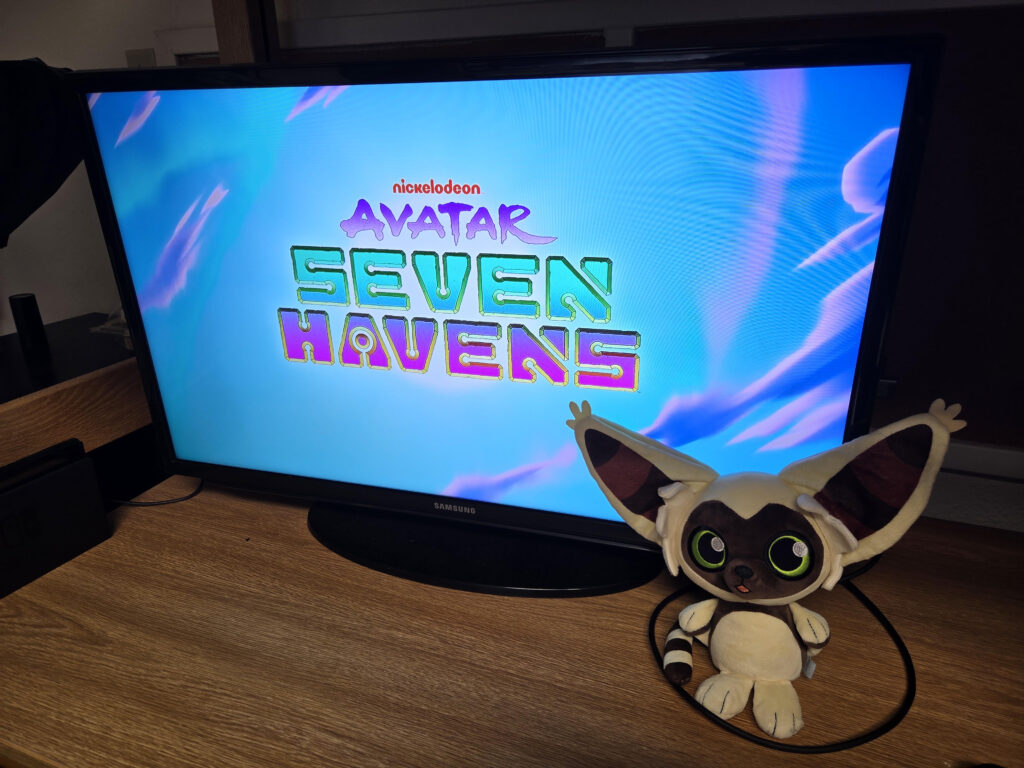
As of Oct. 9 2026, it had been 11 years, nine months and 20 days since the finale of “Avatar: The Last Airbender” aired. Its sequel, “The Legend of Korra,” ended in Dec. 2014, but the franchise lived on in comics, endless reruns and a Netflix live-action series that brought in a whole new generation of viewers. Now Avatar’s legacy is continuing with “Avatar: Seven Havens,” which I’ve found to be a drastic structural and narrative leap for the universe.
As an avid fan of the franchise, I was beyond excited. My friends and I sat in my dorm to watch the newest episodes that had premiered on Paramount+. The first season of the show, titled “Book 1: Survival,” is to be released in batches on Fridays, with the premier release consisting of the first three episodes.
The show centers around twin sisters named Pavi and Nisha. They live in one of the seven havens, a city called Ellora, created by a devastating global apocalypse referred to as “The Cataclysm.” The series features new and familiar terrain and civilizations. Ellora, a new addition, looks to be situated in a canyon at the center of a vast desert. Pavi, upon discovering that she is the Avatar, is very cautious and hesitant about her newfound duties. Nisha, who is also the Avatar, is bolder and more rash about her decisions and takes a more heroic stance in regard to her powers.
Through their separate ways of embracing their element bending, the sisters are opposites of each other, creating a balance within a world that is described as being out of balance. Both humans and spirits hunt the twin Avatars while they try to uncover the truth behind their origins and restore balance to the Seven Havens with the help of their airbending trainer, Jae.
Jae is a rule-following young airbender, part of Ellora’s Bending Brigade and a mentor to the twin Avatars. He’s an example of how creators Michael Dante DiMartino and Bryan Konietzko incorporate real-life Asian, Indigenous and South Asian cultures to build the world’s aesthetic, martial arts, philosophy and geography. Jae has distinctly Korean-inspired elements, with his name being derived from the Hanja character 재. He also says that his favorite food is kimchi chigae, a traditionally Korean dish.
The music in the series so far is very nostalgic to the first series, “Avatar: The Last Airbender.” In one of the first scenes of episode one, a guard can be heard whistling the familiar theme song from the original show, and Pavi uses a kalimba, which was also used many times in the original series. With these references, there’s also new music that feels very futuristic, with synth and electronic elements that help remind the viewer that we’re in the future while in the same world as before.
The animation, however, gives me mixed feelings. The art style features interesting geometric rock formations, pastel horizons, and nice simple character designs; the character movements, however, are choppy. I told my friends while we watched that the characters feel very stiff and limited, which affects the way bending and fighting look. There is also a scene in episode one where Pavi releases a basket full of crystal beetles and the crowd scatters in fear. However, when we’re focused on individual characters such as Jae or Pavi, the background characters are completely frozen, which took me out of the commotion and chaos the writers were trying to convey.
The animation complaints aren’t just my own, many fans on social media have noticed similar issues. This is most likely due to the shifts in both budget and animation studios. “Avatar: The Last Airbender” and “The Legend of Korra” were both animated with higher budgets in various animation studios in South Korea, such as JM Animation, MOI Animation and Studio Mir. “Avatar: Seven Havens,” however, was animated with a tighter budget in a French studio called La Chouette Compagnie. This studio works less with hand-drawn animation and more with rigging, a type of animation where a digital model can be posed and animated, which results in a less smooth visual pacing compared to previous series.
I firmly believe that the writing in this show is strong, and, despite my qualms, these first three episodes have me wanting more and more. It’s a great follow-up to the action-packed “The Legend of Korra” and a reminder of the goofy found-family fans fell in love with in “Avatar: The Last Airbender.”

 Grace Chaves
 Kailyn Collette