

One of the most influential American celebrities of all time, Dolly Parton, has left a lasting legacy through pop culture, music and philanthropy.
Many of my friends actively participated in her Imagination Library program, where children up to five years old were sent one book every month. My best friend’s car is named Dolly after her namesake. My sister bakes cuppa cuppa cake on rainy days because of Parton’s character in “Steel Magnolias.” Overall, it’s impossible to deny her lasting impact in light of her recent passing this August.
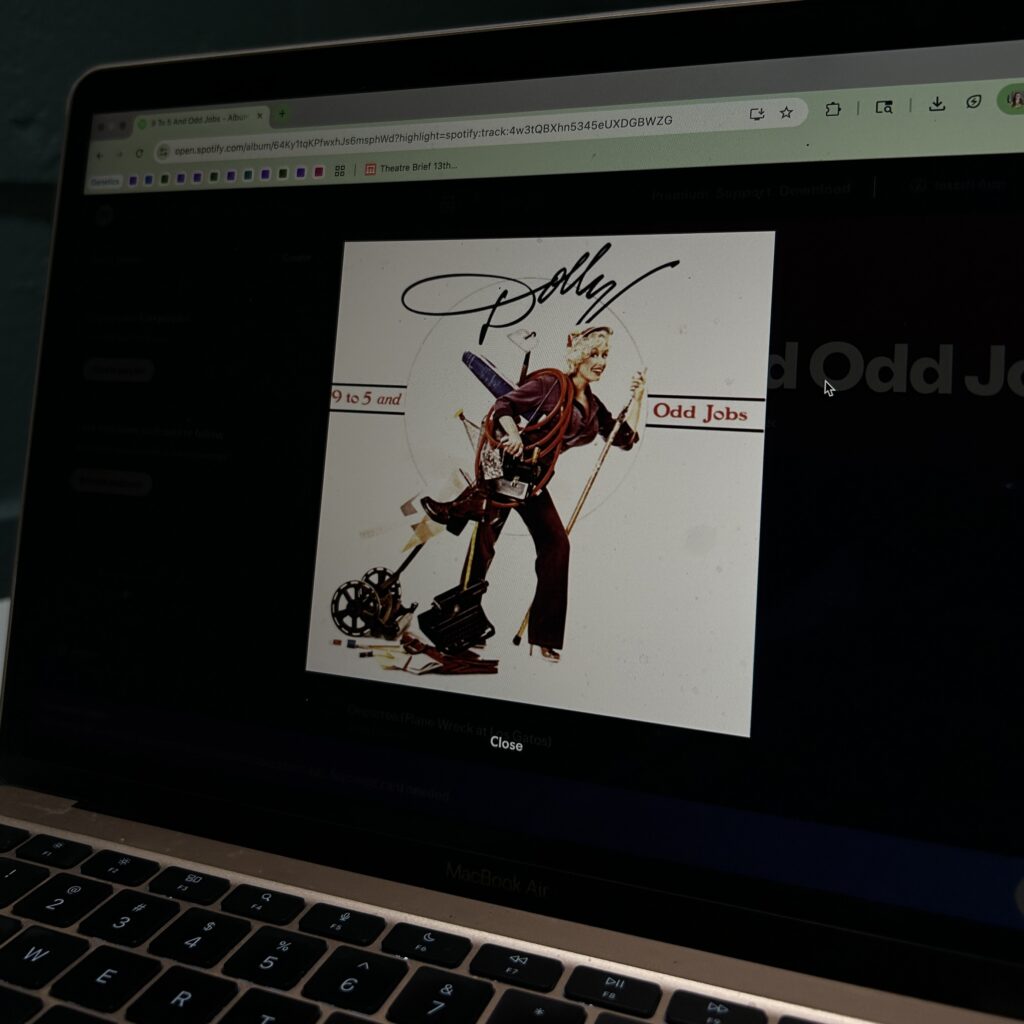
“9 to 5 and Odd Jobs” is Parton’s 1980 album that encompasses her personality and genuine soul in a mere 35 minutes of runtime.
What makes this album so special is that it feels authentically Parton. Many of the songs are covers, but they were handpicked due to their strong themes that coincide with the entire work, while also being reinvented to fit the feeling of Parton’s personality. Her country roots are retained in each song and bring a new level of enjoyment from the original pieces.
With a vibrant start to the album in “9 to 5,” Parton immediately greets the listener to the clicks and clacks of a typewriter and rhythmic typing sounds that act as a main instrument. The first song is about the exploitation of the working class, which outlines the overarching theme of the album — the struggles of the average working American of the era.
Following is “Hush-a-Bye Hard Times,” which diverges from the more pop-centered instrumentation in “9 to 5” in favor of true, rustic country music. Being one of my favorites of the five original songs on the album, Parton playfully combines a common nursery rhyme with reassurance in the face of stressful times.
“Oh hush-a-bye hard times, go ye away / Many years you have lingered around my cabin door” are lyrics that stick out. Life is not promised to be easy, and Parton admits this with the latter line that struggle is always waiting for a moment to present itself. Even the mention of a cabin door is a nod to the water and electricity-deprived home she lived in her early childhood. However, the play on the “Hush-a-Bye” lullaby acts as if Parton is cooing a child to sleep, escaping the harsh reality of life.
Although the album comprises 10 songs, five of them are covers or tributes to already existing songs. “The House of the Rising Sun,” “Dark as a Dungeon” and “Deportee (Plane Wreck at Los Gatos)” exhibit Parton’s intentions perfectly. One describes how easy it is for someone to slip
into addiction through gambling, the next is about the dangers of coal mining and unregulated labor laws, and the last is a protest song about 28 unnamed Mexican workers in a fatal plane crash.
Parton’s deliberate efforts to include the given covers make the album feel whole. Yes, it was very much possible for her to have recorded more original songs instead of the covers; however, their presence further showcases Parton’s character. There are timeless pieces that already exist in the country and folk scene that hold painful memories that work themselves beautifully into this album’s purpose.
“9 to 5 and Odd Jobs” is a tribute to the working class, a rallying cry that captures the monotonous days, the backbreaking work and scraps for pay that people are often rewarded for their efforts. Yet, as the final song “Poor Folks Town” eloquently states: “We got no money, but we’re rich in love / That’s one thing, that we’ve got plenty of.”
Parton was no stranger to the not-so-picturesque reality of life, but her album works to make those who are stuck in the cycle feel seen and remind them that there is a light at the end of the tunnel. Parton died on August 25 of this year, and many individuals were affected by the loss of an icon. Yet this album and many of her other works remain as a reminder of her genuineness even in the limelight.

 Hailey Snyder