

Home temporarily looks a little different for the 211 students living in Young Hall this fall.
Construction crews spent the summer transforming the residence hall’s common spaces, but delays have pushed the project into the new semester, temporarily leaving residents without access to their usual kitchen and laundry machines.
The renovation is part of a larger effort by Point Loma Nazarene University to maintain and improve its residence halls and campus facilities. Construction and repair projects are regularly scheduled during the summer months for many different dorms and buildings when the majority of students are away, allowing the university to complete work with as little disruption to campus life as possible.
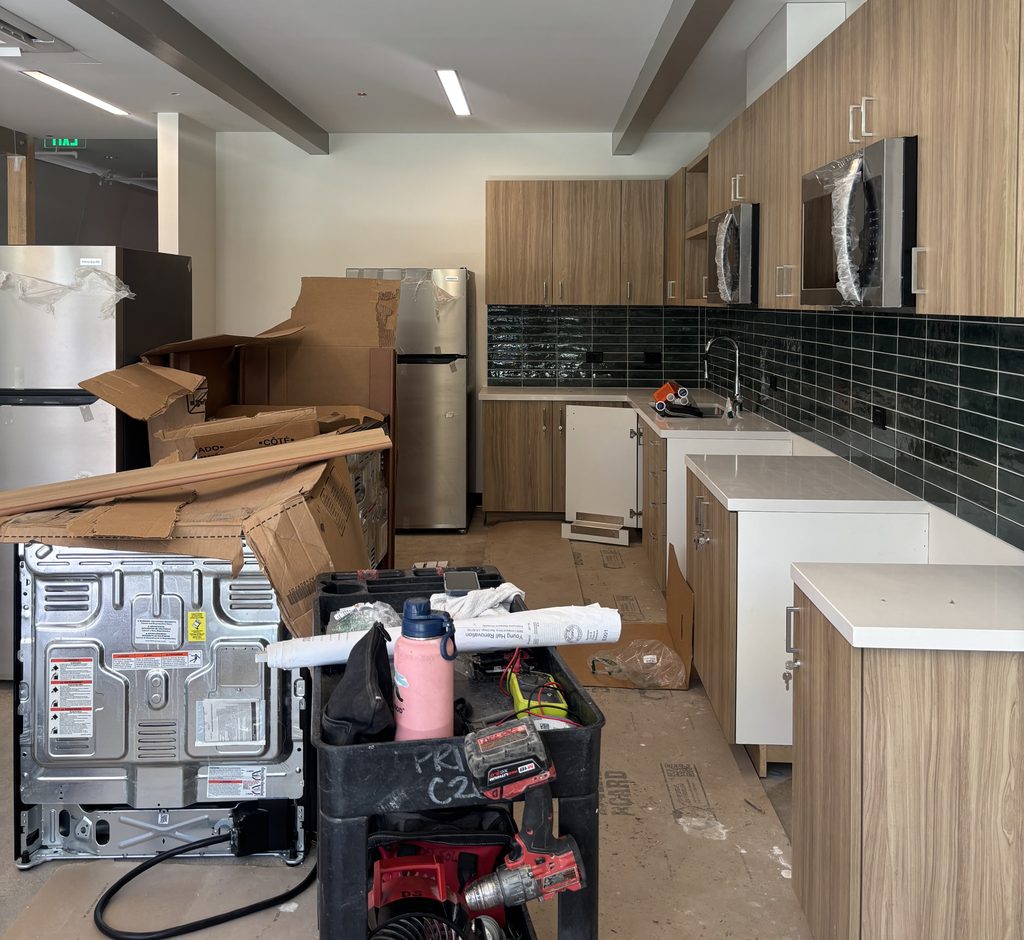
Young Hall’s current project began May 19 and is the first phase of a multi-year renovation plan for the residence hall. This phase includes updates to the kitchen, common room, laundry room and surfboard shed. The next two phases are expected to focus on the bathrooms and individual dorm rooms over the next several summers.
According to Chip Pitkin, Young Hall’s Residential Director, the university had filed its permits in December, but changes to the City of San Diego’s permitting process caused the project to fall behind.
Construction began with demolition in May, but Pitkin said the project did not fully get moving again until late June or mid-July. Because Young Hall only has a few months each summer when construction can take place, the delay had a significant impact on the project’s timeline.
As a result, Young Hall was not fully ready when students returned for the fall semester.
Ruben Reyes, the Bycor Construction superintendent overseeing the project, said crews are working to complete the first phase as quickly as possible. Construction workers have been working night shifts and weekends to make up for lost time.
One of the biggest changes included the deconstruction of the unique “whale room,” a common space named after a large mural created by an alumnus that covered one of its walls. The walls are now plain white with a new doorframe open by the entrance. Pitkin said the university wanted the interior design to have a more cohesive aesthetic with other residence halls across campus.
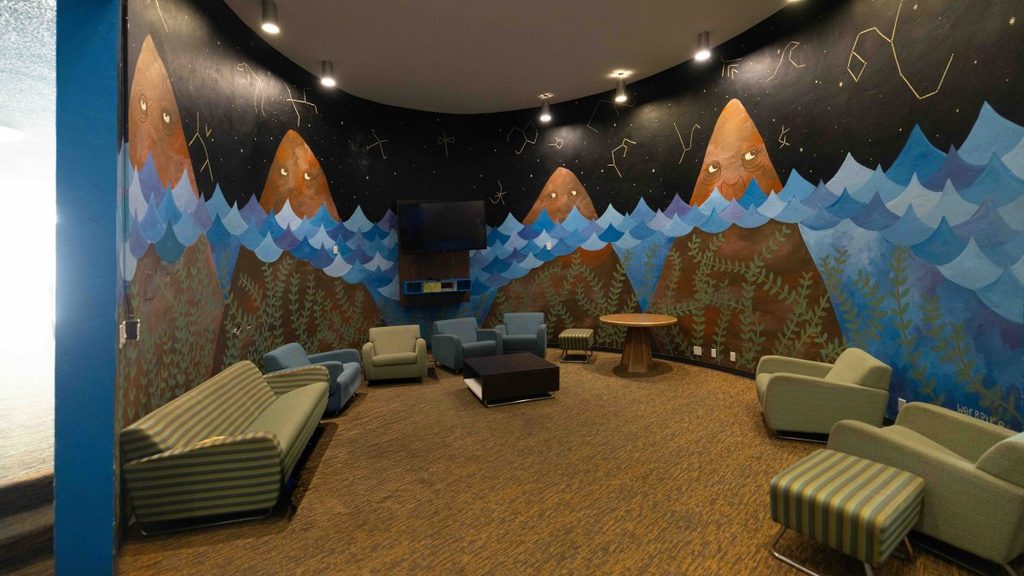
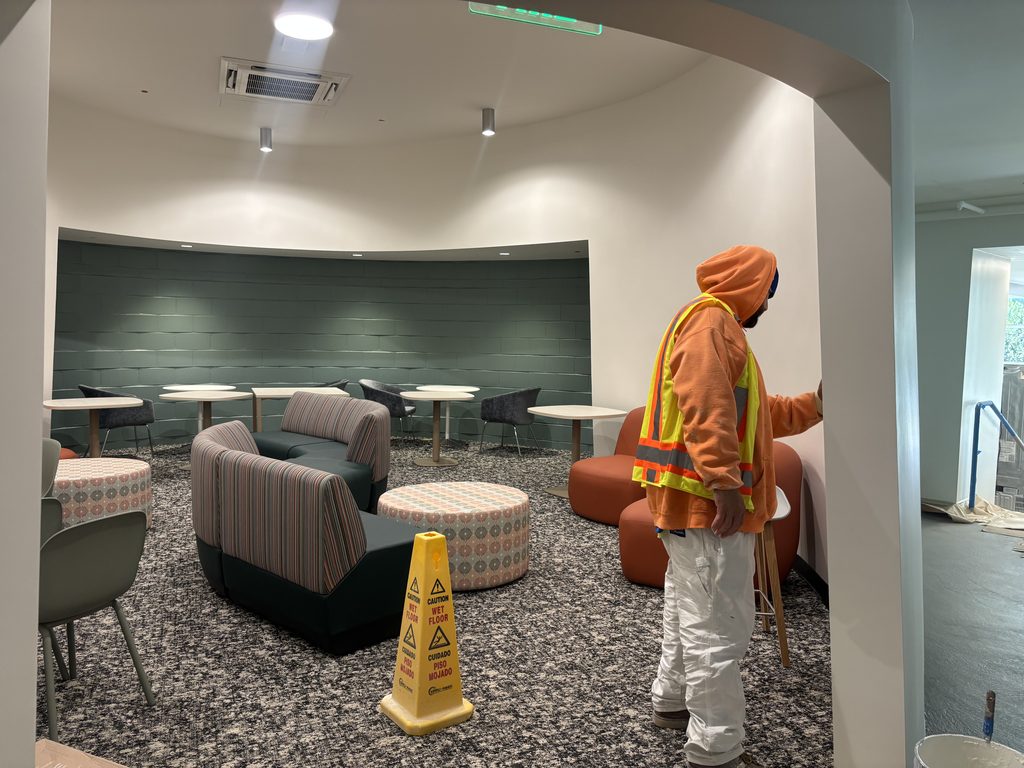
Reyes said the space had dark lighting and was difficult to access. The new design is intended to make the area brighter and “functional.”
The updated kitchen also includes a television, a new ping-pong table and improved wheelchair accessibility.
While the new spaces are taking shape, residents have had to adjust to temporary changes. Young Hall students were informed of the disruptions before returning to campus, as Pitkin sent different emails based on when students were arriving, including student leaders, student-athletes, international students and resident assistants.
“It’s not my favorite thing to be the bearer of bad news, but I also get to be the mirror of good news too, because when this opens, I think students are really gonna be pretty thrilled for the improvements,” Pitkin said.
As a solution, Young Hall residents were given access to laundry rooms in other residence halls in the meantime. “It just seems like the solution with the least amount of barriers, logistics, and [most] ease for students,” he said.
He encouraged students to think of the temporary arrangement, like taking their clothes to a laundromat or a trip to visit a dorm where their friends live.
Jordan Timkey, a second-year child and adolescent development major, is a resident in Young and said she took her laundry across campus to New Nease because she has friends there.
“My experience has been good overall. I thought it would’ve been worse,” she said. “I think the renovations are going to be really exciting. Young kind of needs it.”
Pitkin said the university recognizes that students and their families have expectations when they pay to live on campus.
“I understand that everybody’s going to react to disappointment and inconvenience differently … and I certainly understand there’s an expectation when [students and their families] are paying to be here and expect to have it provided,” Pitkin said. “Stuff happens, you know, and sometimes there’s no ideal solution, and we come up with one that has to be the best.”

 Ava Bailey-Klugh
  Adee Tulcan
  Sydney Brammer