

What started as a project documenting street art in the cities of Taiwan became something far more unique and personal for Point Loma Nazarene University professor James Wicks.
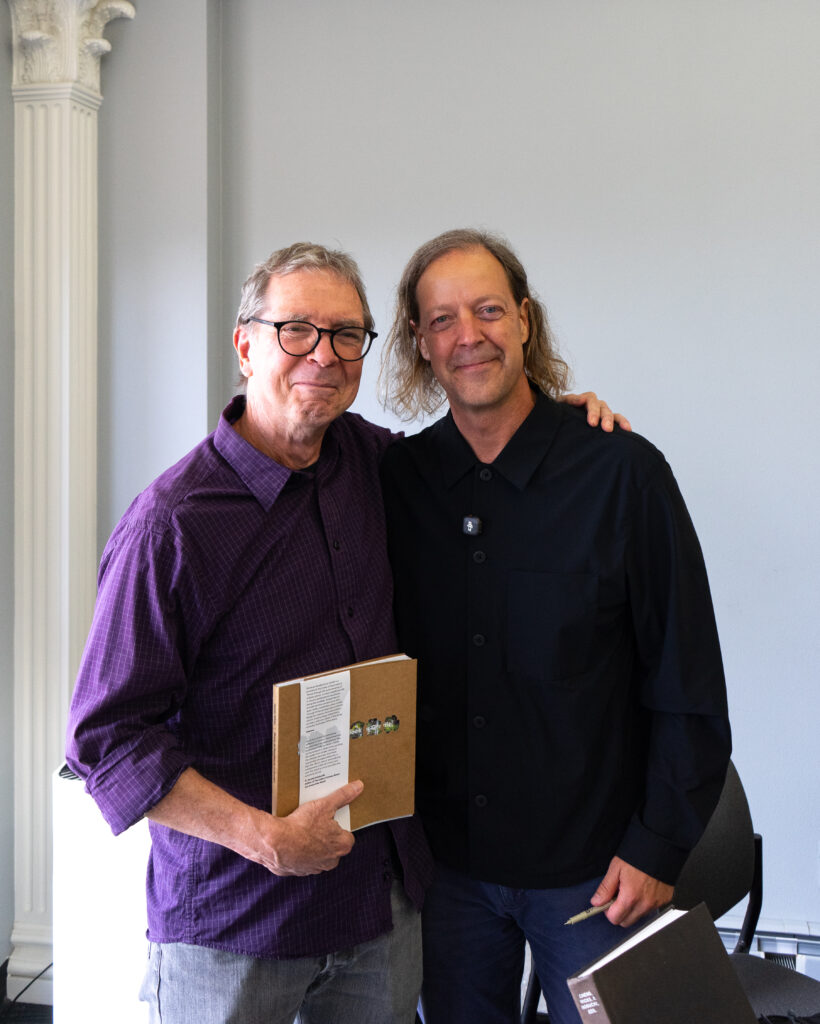
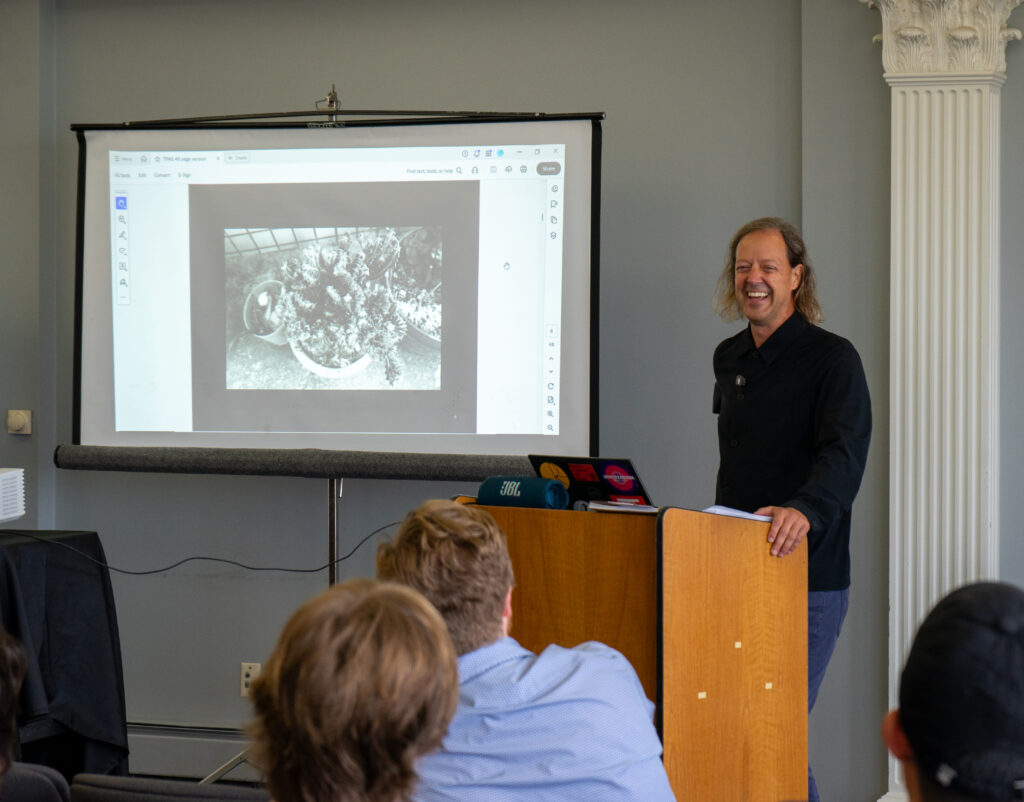
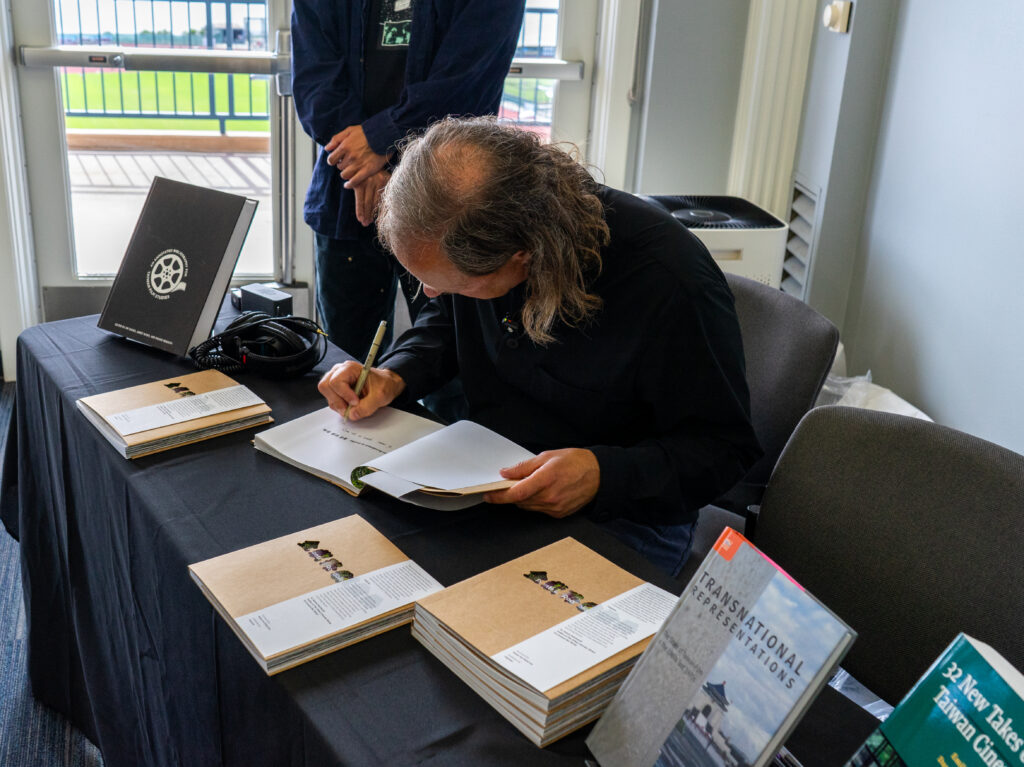
On April 20, Wicks, a professor of media and film studies, celebrated the launch of his photobook “Plants as Roadblock as Graffiti” in the Colt Forum on campus, surrounded by friends, colleagues and students.
Among the tall, dense and gray urban spaces of Taiwanese cities, residents decorate storefronts and concrete buildings with colorful plants, flowers and vases. Having grown up in Taiwan, Wicks said he was surprised he never noticed this subtle art form before.
“I’ve always seen these street plants my whole life, and they were invisible to me,” Wicks said. “They were so mundane that I didn’t even notice them. I became conscious of something that was always around me, and something that I took for granted is now something that I find incredibly beautiful.”
With a camera in hand, Wicks originally planned to photodocument the ever-increasing street art and graffiti movement in Taiwan, but as he explored the urban landscapes, he found that the plants that contrasted the obstructing concrete stood out most.
“I started seeing the way that people would plant certain flowers and their colors or the vases, and all of them I saw as unique, colorful works of art that similarly made sometimes really ugly parts of urban environments attractive, interesting and creative,” Wicks said.
Lindsey Lupo, PLNU professor of political science and dean of the School of Humanities, Arts and Public Engagement, introduced Wicks at the book launch. She said his work embodies the critical thinking and creative expression emphasized within the department.
“As a researcher, I so appreciated his story of how he pivoted his focus from graffiti to plants,” Lupo said in an email interview. “I try to always encourage my students to be comfortable with the discomfort of changing plans and he modeled how to do this confidently — some of the most creative and productive moments come from shifts like these.”
Wicks’ idea for the publication was inspired by skateboarder and photographer Ray Barbee, who published his first photobook, “The Joy is in Capturing the Journey,” in May 2025. After reaching out to various publishers, Unpress — an independent publisher and creative studio — quickly came on board. Following a series of Zoom meetings, contract negotiations and conversations about the book’s layout, “Plants as Roadblock as Graffiti” was sent to the risograph — a stencil-based process used to create vibrant and textured prints.
One of Unpress’s owners is also from Taiwan, and one of their employees lived for a month in the Taiwanese city where Wicks took many of the photos. Wicks said this brought a unique sense of community to the project.
“I think there was definitely a human connection to the project,” Wicks said. “There was a common ground right from the start.”
Jeffrie McGehee, a fourth-year philosophy major and student of Wicks, said it’s important for students to see their professors actively practicing their field and pursuing creative work.
“[Wicks] is learning at the same time we are, and that’s really cool,” McGehee said. “Having an academic — someone who knows how to learn, do that at the same time — I think that’s pretty sweet.”
Jim Daichendt, PLNU provost, chief academic officer and adjunct professor of art history, said it can be inspiring for students to see their instructors publish professional work.
“When students see their professors actively creating, publishing and contributing to their disciplines, it changes how they understand learning,” Daichendt said in an email interview. “It becomes dynamic rather than static.”
Both Lupo and McGehee said the book reflects Wicks’ talent as a creative and who he is as a person.
“James is an incredible filmmaker, scholar, and teacher and most importantly, his joy in sharing his knowledge, experiences and talents with students — as a way to get them excited — is just the coolest,” Lupo said.
“I think it shows a lot about his character and the way he’s sensitive to the world — what catches his attention,” McGehee said. “I think it says a lot about him as a person. This is a book about James.”
Wicks said hosting a book launch on campus was a great way to share his art with colleagues and students, whom he considers friends. He said it was the people who made the event special.
“That’s really the most important thing about it — is the people that are there and being able to share an experience with your friends — that was what was meaningful to me,” Wicks said. “I hope the takeaway would be that the mundane can be really interesting and beautiful if you’re willing to see it in a new way.”

 Grace Chaves
  Adee Tulcan