

Sitting in Newport Beach, Calif., where my earliest assumptions of surfing were shaped, I reflected on how I developed my personal surf style.
I used to hate surfing. I hated anything I wasn’t good at.
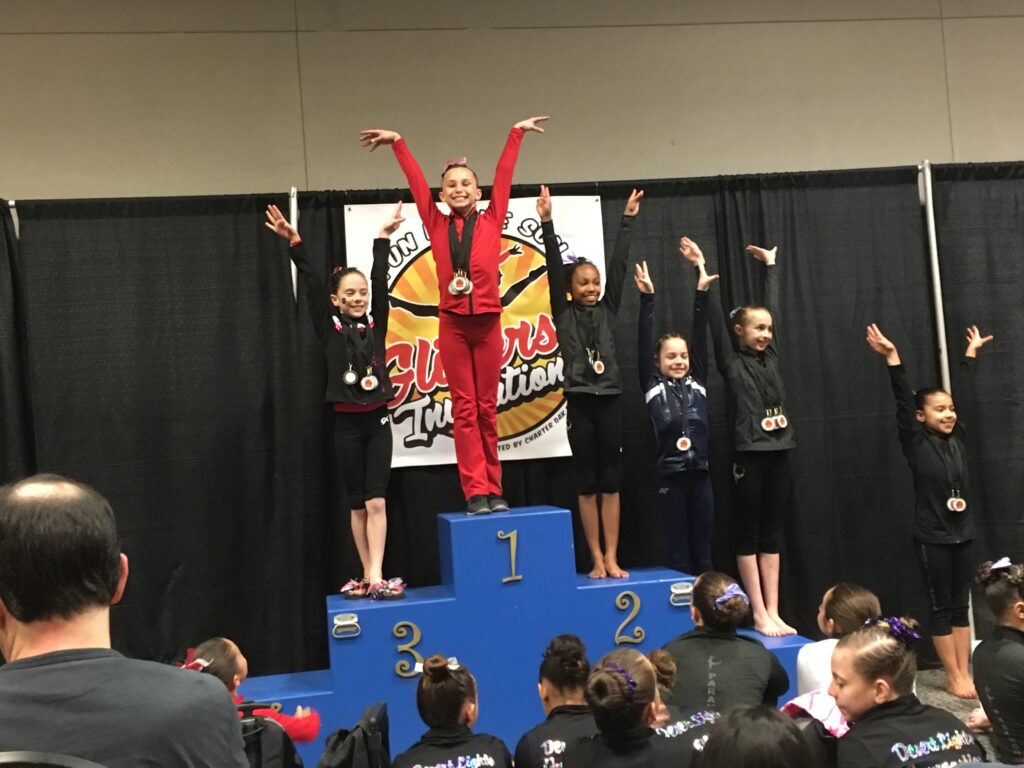
From ages 5 to 13, I dedicated my life to gymnastics. I spent up to 30 hours a week in the gym. I got checked out of school early, drove 45 minutes to one of the best gyms in the area and left after dark.
I missed many experiences that typically shape fond childhood memories — school dances, overnight field trips, after-school playdates — all to chase a perfect 10. By the end, I resented the sport.
At 13, I shattered the cartilage in my elbow from repetitive wear and tear. It was locked in a 90-degree angle and eventually required surgery. This became my escape, my final excuse to quit the sport that had defined my identity.
Starting something new at 15 felt entirely different — gymnastics was what I knew. Everyone else was already established, and I was starting from scratch, miles behind.
At that time, my sister had recently found a knack for surfing. She took lessons from a woman at our local beach who taught her the unspoken rules that separate beginners from everyone else. She had learned the ropes and wanted me to join.
After many attempts to convince me, I finally gave in.
She drove us to a spot she thought would be good for me. “Beginner-friendly,” she said, but if you had asked me that day, it definitely was not.
We stepped onto the sand and walked toward the water. By the time I climbed onto my board, she was almost to the lineup.
I saw the first wave rolling toward me. It didn’t look very big, but I had no idea what to do. I stayed on my stomach, barely moving and was immediately knocked off. My board dragged behind me, and my mouth filled with water as I tried to surface and reel it back in.
I climbed back onto my board, now even further back, trying to catch up to my sister.
“Turtle!” she yelled.
I looked around, searching for a floating animal.
I later learned that “turtle” refers to flipping your board upside down and holding tight as a wave passes over you, helping you get through the broken wave faster.
Still struggling, I forced myself over a few more waves and finally made it to where my sister was floating. I hadn’t caught a single wave and was ready to give up.
There was no happy ending that day. I stood up on a few waves, riding straight toward shore because it was all I knew how to do, and got yelled at by a local whose wave I ruined.
I left feeling discouraged, upset and above all, embarrassed.
It didn’t keep me from coming back, but the next time, it was on my own terms. I kept going out with my sister, sometimes more than once a day, and I started to get the hang of it.
The balance from gymnastics transferred well, and after a few months on a foam board, I found myself walking up and down it, ready for more.
This is when my surf style began to develop.
Surf style, often recognized instinctively from the shore for its ability to draw in admiring eyes, becomes an art form that surfers build over time through their lived experiences, influences and intention.
Style lives in the choices a surfer makes: Whether their board is long or short, heavy or light. Whether they approach the wave in an effort to glide within it or resist its direction with sharpness. Whether they choose to keep their feet planted, relying mainly on turns for movement, or move them up and down the board in a motion resembling a dance.
As each surfer has different life experiences, their motivations for getting in the water shift.
As I improved, my personal style began to take shape around ideals I was subconsciously forming:
- I never wanted to take surfing too seriously. I had experienced the pressure of a high-stakes sport, and it led to resentment. I never wanted to resent surfing.
- I refused to view surfing as competitive rather than recreational. In high school, I joined the surf team so I could be in the water before class. Naturally competitive, I felt moments of anxiety creep in, but learned to brush them off quickly.
- I wanted to have fun. My first experience had been tainted by being yelled at, and I never wanted to become that person in the water, no matter how much I improved. To this day, I try to see time in the ocean as a gift, regardless of the waves or the crowd.
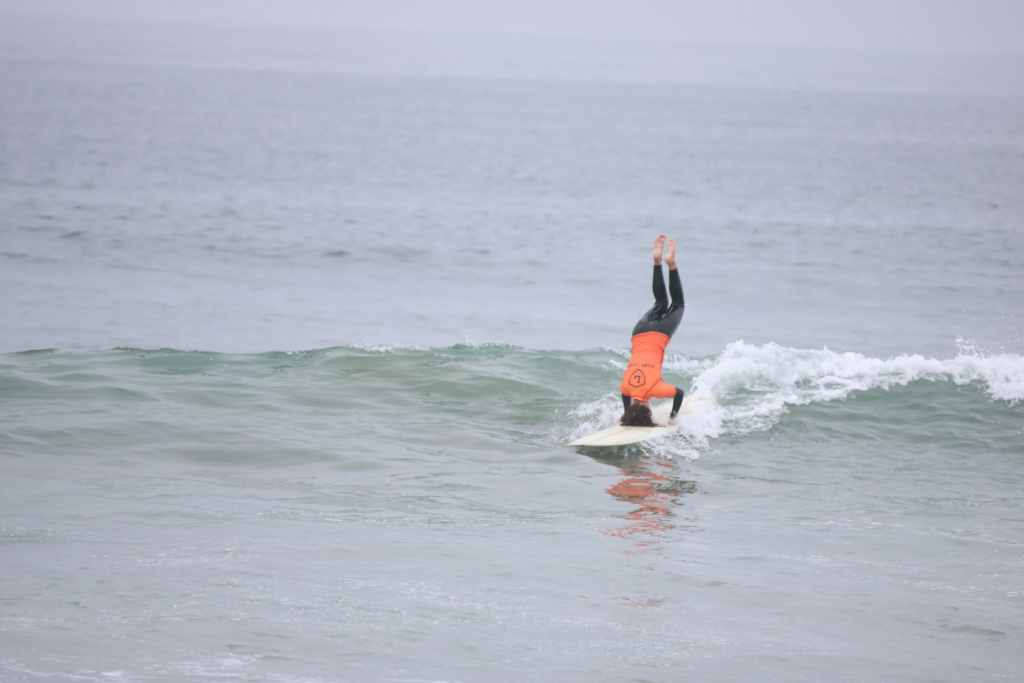
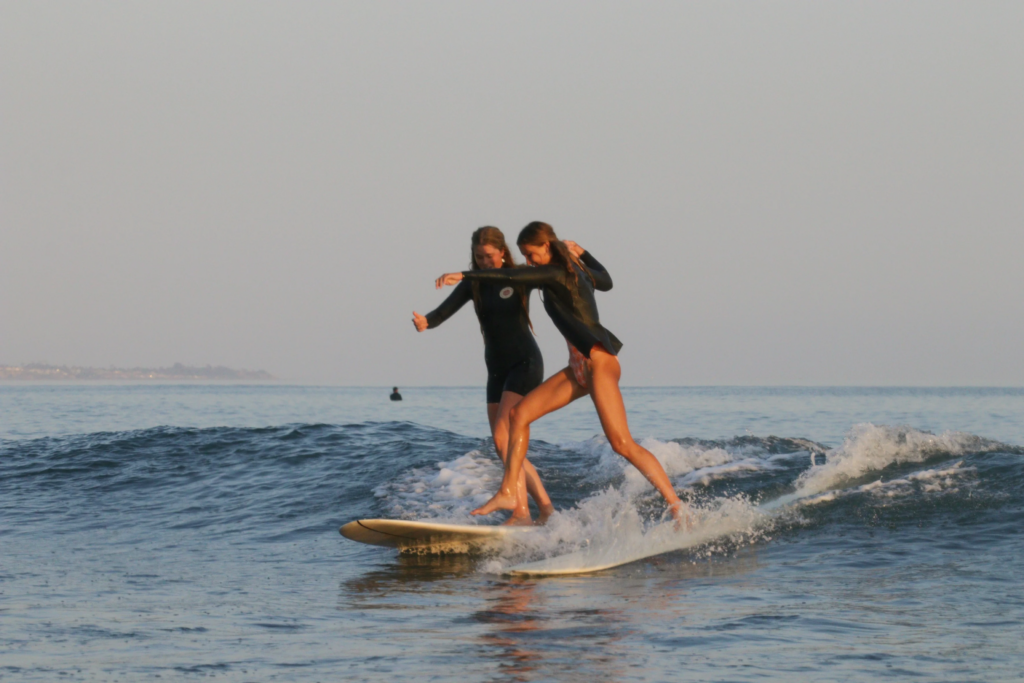
When I surf now, those values show. I throw in a headstand from time to time, even in competition, just to remind myself it’s not that serious. I spin on my board, jump onto my sister’s, and pace up and down it like a balance beam, always keeping my right hand raised despite being told numerous times that I look like the Statue of Liberty.
What I’ve learned is that in surfing, no two perfect 10s look the same. No rulebook says you need a certain number of turns or steps to the nose of your board. No rule says your arms have to stay at your sides, or that you can’t bend your knees more than someone else.
Sitting back between these two jetties, I realized that surfing has reshaped my need to seek perfection in a sport and pushed me to set my own standard. One that isn’t based on how I perform every time I touch the water, but based on the joy it brings me, and the friends I get to share the water with.

 Nathan Gibbs
  Madelyn Lucas