

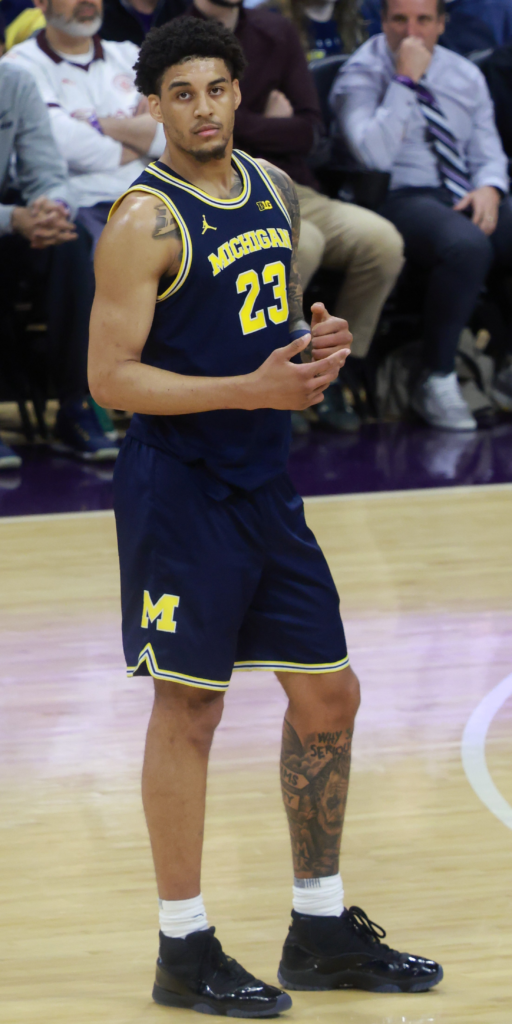
Last weekend, the University of Michigan’s men’s basketball team capped their dominant season with a national championship win against the University of Connecticut, winning 69-63. It’s the team’s second national title in program history, with their first one coming in 1989, and it’s the first national title win in the Big Ten Conference since Tom Izzo and Michigan State did it in 2000.
But it’s the way this one was won that stands out.
You think about many of the best college basketball teams of all time: Jim Calhoun’s Rip Hamilton-led UConn Huskies, Mike Krzyzewski and Christian Laettner’s run at Duke and Billy Donovan’s back-to-back national title-winning Florida teams.
Those teams all have two things in common: well-seasoned coaches and veteran players. It was around the time Donovan won those two national titles in the mid 2000s that the “one and done” model, spearheaded by John Calipari at Kentucky, began to take effect.
Since the National Basketball Association (NBA) ruled that players must be at least 19 years old and one year removed from high school graduation to be drafted, top prospects like Kevin Durant and Derrick Rose were forced to play in college for a year as opposed to getting drafted straight out of high school. The best recruits that continue to dominate college basketball are freshmen.
The next drastic shift in college basketball is being lived out in some of the best teams today: The introduction of the transfer portal and players’ ability to be paid through their Name, Image and Likeness. Players used to be deterred from transferring due to a rule that stated players must sit a year if they transfer schools. Now, players have unlimited transfers and are immediately eligible to play at their new school, so long as they transfer within the 15-day window after the national championship.
Head coach Dusty May and the 2025-26 Michigan Wolverines are a testament to the necessity for basketball programs to prioritize the transfer portal just as much as high school recruiting.
It’s often said that solid team culture is one of the most important traits a coach needs to bring to the table. It can take multiple years to foster that culture, hence why it may take coaches time to find their footing before bringing programs immense success.
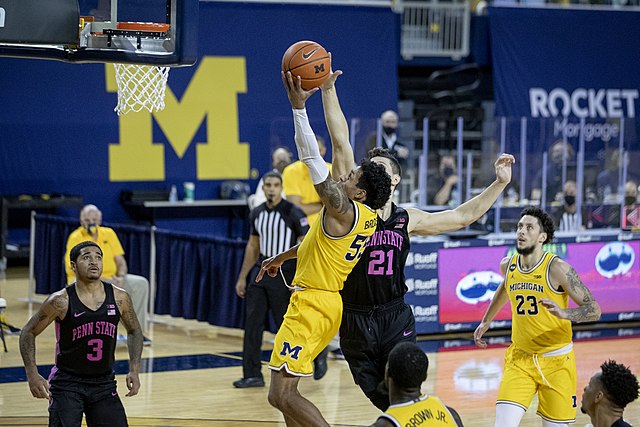
And yet, May won the title in only his second year at the helm, only one year after Todd Golden won it in his third season at Florida. In large part, that can be attributed to the system of college basketball. Golden and May have both mastered the art of the transfer portal, and brought in transfers that not only contributed, but led their respective teams to the mountaintop of college basketball.
Of the eight players who played in the championship game for Michigan, six are transfers, including the entire starting five. The five leading scorers for the Wolverines were not only transfers, but in their first year at the university, including first-year guard Trey McKenney.
Fifth-year forward Yaxel Lendeborg played three years of junior college before playing at the NCAA level. He then spent two years at the University of Alabama Birmingham, and in his lone season with the Wolverines, won Big Ten Conference Player of the Year, was named First Team All-American and led Michigan to its impressive record of 37-3 and national championship.
There has been much discourse over the state of college sports, with recent, drastic changes like conference realignment, and as previously mentioned, the transfer portal and NIL system. Whether it’s good for the sport is up for debate.
But what this year’s Michigan team proved is that if navigated well, the transfer portal can be mutually beneficial. Lendeborg was given the opportunity to play at a premiere program and boost his NBA Draft stock. May brought a hungry fanbase back to the top and immediately put himself in the conversation for best active college basketball coaches.
Whether you’re for or against the modern format of college basketball, my advice would be to get used to it. With the success some of the best teams have experienced through the transfer portal and use of money to sway recruits, I don’t see any of it going away anytime soon.

 Denzell Washington