
There’s something special about walking out of a movie theater and knowing that you’re among the group of the first people to ever watch the film.
I experienced that feeling for nearly a week at the Sundance Film Festival from Jan. 22 to Feb 1.
Nine students, two professors and I headed to the small town of Park City, Utah, to take in the final Sundance, located in the historic mountain town, where it’s been since 1981. Starting next year, it’ll be in Boulder, Colorado.
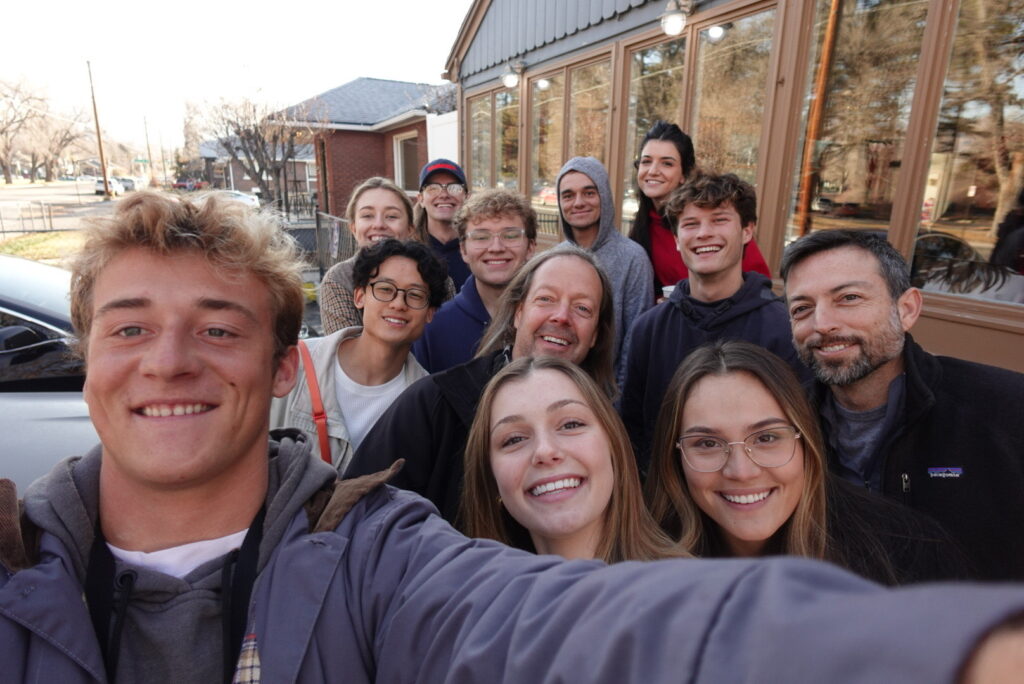
I was able to attend 16 feature-length films and multiple short films, all while interacting with filmmakers, meeting other students and conversing with film buffs traveling from all over.
It was a thrill. Upon walking to our first screening of the week, “Union County,” we accidentally walked between the paparazzi and Gillian Jacobs, most known for “Community” and “The Bear.” This was minutes after getting out of the car. After our screening finished, Will Poulter, also of “The Bear” and the star of the film, was part of the Q&A.
One day in, and I already saw more celebrities than I thought I would.
With our ticket package, we were each allotted tickets to five different screenings, and then I also bought four other tickets the day they dropped. But seven of the films I watched were because of the waitlist, which you have to enter two hours before the screening through Sundance’s app.
In one screening, I was the second-to-last ticket allowed in from the waitlist. In another, I was the last one in. I may have had the worst seats in the house, but the anticipation of getting in derailed any possible negative feelings I had toward the seating situation.
Perhaps one of the more fruitful parts of the whole visit was interacting with people in line, exchanging info about which films they’d seen, fan favorites, thoughts on certain films and why they enjoyed the festival. In some cases, I met friends earlier in the week just to run into them again later and catch up on what we watched since we last saw each other. I’ll never see those people again, but I’ll also never forget bonding over the hope of getting into the screening with our waitlist number.
At the heart of Sundance Film Festival is the goal of elevating individual voices, independent cinema, to tell human stories that make us question, think and reflect. After having interacted with the mecca of independent movie making, here are a few takeaways:
1. The people making these films are exactly that: people.
The filmmakers seemed vulnerable and normal. Some of the filmmakers were quite nervous — they weren’t necessarily PR-trained. For many of them, this was the first time their films were getting watched at this scale. The people behind the lens are much more accessible and conversational than you might imagine, as nearly all of them would love nothing more than to talk to viewers about their movies. Noah Segan, director of “The Only Living Pickpocket in the World,” is one of the directors who wore his giddiness on his sleeve. He was eager to answer questions and tell anecdotes about the making of his film.
2. There’s no “right” way to go about making a film.
Yes, there are certain skills and abilities needed to make a film. Yet, the manner in which the idea is conceptualized and where it comes from doesn’t matter as long as it comes from a genuine place. One director at the festival was working on an action film before coming across a man he met on the river. He scrapped the entire project to make a documentary called “Closure,” about the man and his experience of trying to get closure about his missing son.
3. There’s a level of care that goes into independent cinema that can’t be replicated in studio films.
Because most of the films shown at the Sundance Film Festival come from smaller filmmakers trying to make it in the industry, the stories are personal and heartfelt. These are passion projects because, for the most part, when a filmmaker is starting their career, they work on what they know or what they care about. The people at Sundance love films. I love films. Being around people who are passionate about something is cool. I recommend it.
The quote that most stuck out from the week came from Craig Detweiler, co-founder of the Windrider Institute, the program that sent us PLNU students to the festival. It encapsulates the importance of independent cinema and why I care about these films and filmmakers so much.
“Studio films comfort the afflicted. Independent cinema afflicts the comfortable.”

 Adee Tulcan
  Grace Chaves