

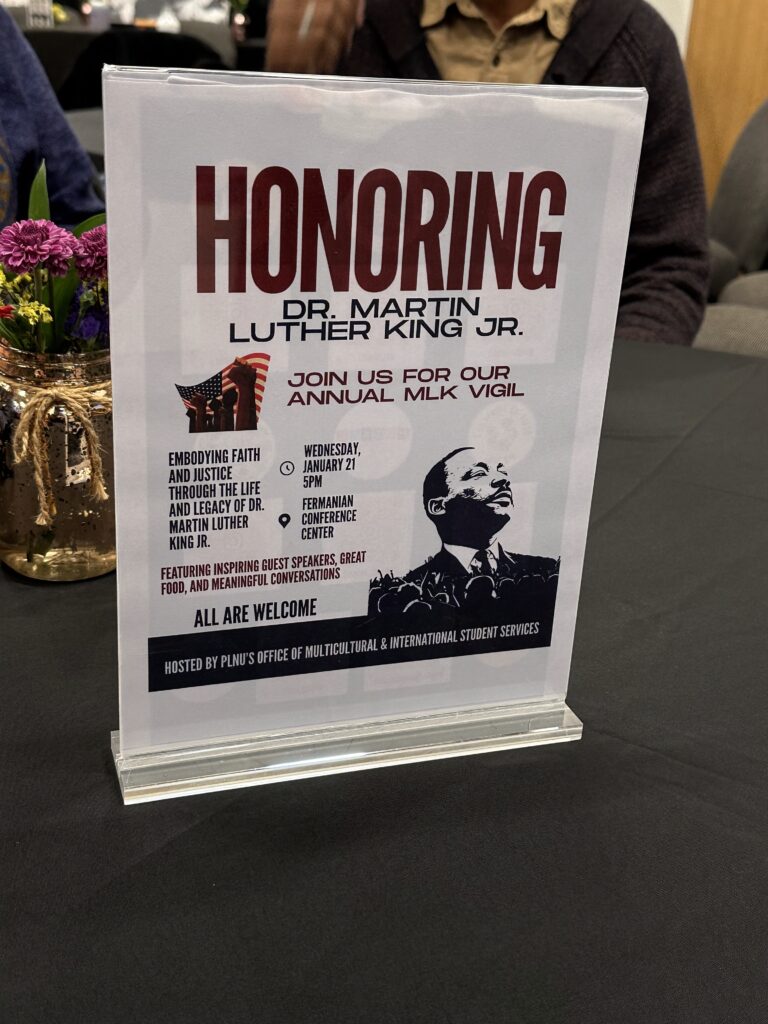
The annual Martin Luther King Jr. vigil was held at Point Loma Nazarene University in the Fermanian Conference Center, hosted by the Office of Multicultural and International Student Services (MOSAIC), commemorating the life of the civil rights leader and allowing students and faculty to reflect on the impact he left on their lives.
Richard Eberheart, MOSAIC director and one of the event organizers, said the turnout on Jan. 21 was the largest it’s been in the past six years.
“And we touch more students; we connect with more students and engage more students, a little bit more each time,” Eberheart said.
The event opened with a prayer led by Dean of Students Jason Cha and a worship song led by Grace San Diego Pastor and Choir Director Ken Anderson.
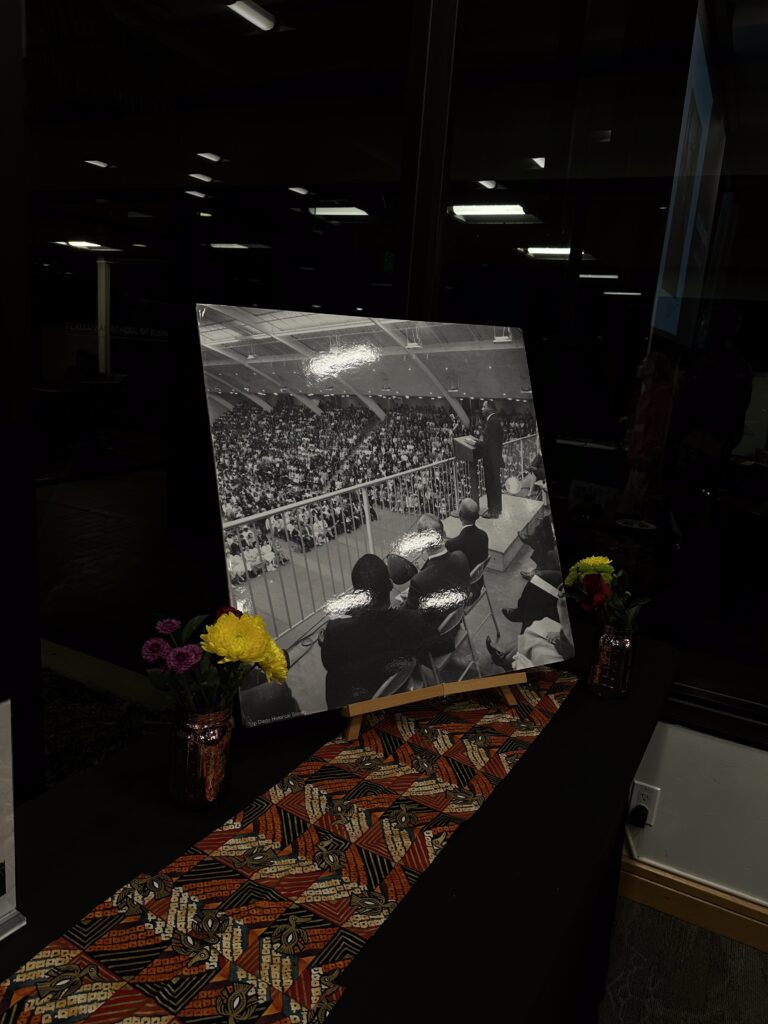
Isa Ortuno, a fourth-year dietetics major, was the event’s first speaker. She reflected on the speech MLK gave in the Golden Gym in 1964, and said she hoped to give a speech as good as the one he gave in that moment.
“I was definitely nervous,” Ortuno said. “There’s a lot more people than I expected. And then also, just like, the feeling of wanting to do it well.”
Ortuno said she hopes attendees take away from the event that justice doesn’t come easily, but everyone can participate in moving toward it.
Adison York, a second-year Spanish and education double major, said the event was what she expected with good food, guest speakers and community.
“I also loved reflecting on the speech that MLK gave here on campus,” York said.
She said MLK’s speech was inspiring and still has relevance today and that she felt a sense of community throughout the event.
“I just appreciated this space to just share honestly and speak the truth,” York said. “Like, not be afraid to talk about the parts of it that are hard, that are broken, that have still not changed since the time of Dr. Martin Luther King.”
Eberheart concluded the vigil by listing different events that students and faculty can attend to continue the pursuit of justice, such as an annual conference hosted by Student Congress On Racial Reconciliation on Feb. 13.
“I think the big thing I want them [students and faculty] to kind of think about is like, ‘What are other things that they can do in their own spaces to embrace justice and embrace students that may be feeling like they’re the outcast and maybe feeling like they don’t belong?’” Eberheart said.

 Carson Dillon