

Editor’s Note: This article contains language of human trafficking and sexual violence.
The estimated annual revenue generated from sex trafficking in San Diego could send approximately 6,407 students through all four years of school at Point Loma Nazarene University, according to a Human Trafficking Report by the University of San Diego. PLNU’s Center for Justice and Reconciliation (CJR) has found that the majority of research surrounding this $810 million industry has missed a key aspect of any functioning market, but a recent California law is starting to change that.
A bill that penalizes those who seek and pay for prostitution, specifically from minors, took effect on Jan. 1. This bill, AB 379, also includes a fine that will go into a fund that supports survivors. This marks a change from the previous laws by increasing the punishment faced for purchasing sex, and introduces punishment for the intent of purchasing sex, which previously didn’t exist.
Kate Burba, a second-year theology, justice and peace and philosophy double major, is a research assistant at the CJR. She said that human trafficking is a complex system that functions within an economy.
“Meaningful change requires addressing more than one side,” Burba said. “You have to talk about both sides: those who profit from exploitation, and those who contribute to demand. Addressing demand [through the bill] is essential to long-term change.”
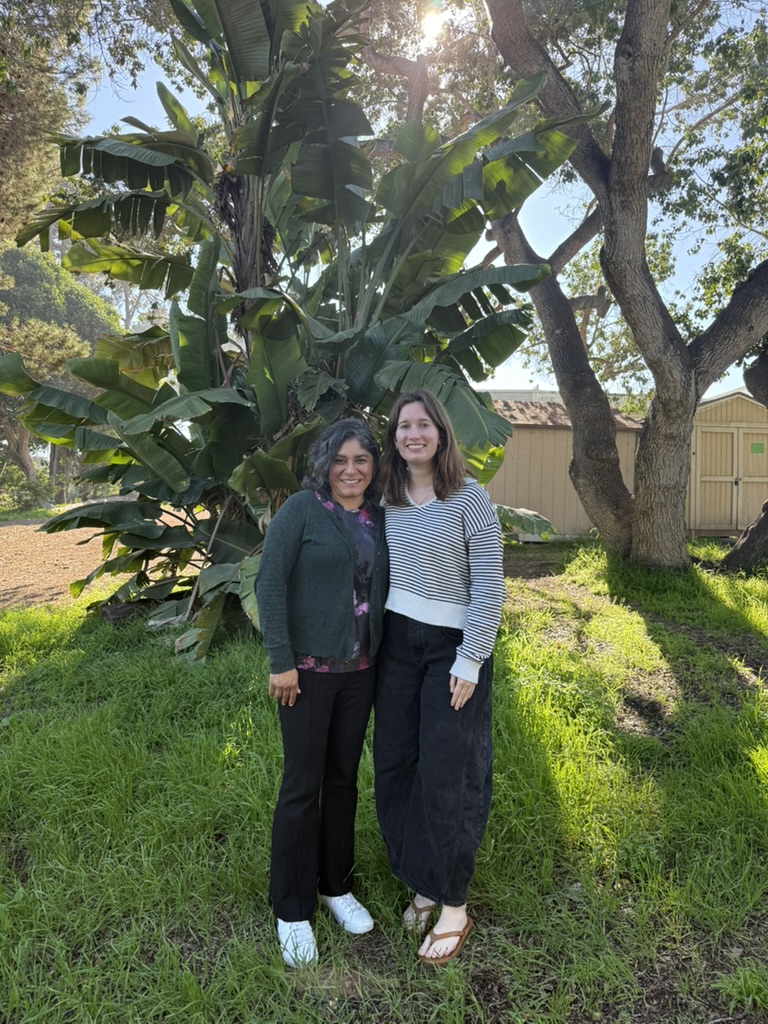
While the bill addresses the demand on the state level, locally, the CJR has been conducting research regarding the demand side of the human trafficking market since last summer.
This research was published on Nov. 14 last year, titled “Understanding and Addressing Sex Buyer Demand: Impacts on Victims of Commercial Sexual Exploitation.” Those who wrote and worked on this brief, through the Human Trafficking Research and Data Advisory Round Table (HT-RADAR), compiled research that has been done on the role of sex-buyers in human trafficking.
Arduizur Carli Richie-Zavaleta, senior research associate at the CJR, is one of the report’s authors. She said the bill’s passing was an important step forward in the fight against human trafficking, in a time when financial support for anti-trafficking efforts is decreasing.
“Funding is scarce,” Richie-Zavaleta said in an email interview. “Creating sustainable strategies to tap into more financial resources to support the healing of survivors of human trafficking, building stronger prosecutorial systems and protecting youth from sexual exploitation are always welcome and greatly needed.”
Marjorie Saylor, the board president of the Survivor Leader Network of San Diego, collaborated with the CJR on the brief. She is a survivor of human trafficking who has worked in advocacy and law-making since 2015. As part of the team that helped fight for the passing of AB 379, she said its success indicates a shift in the narrative around human trafficking.
“10 years ago, we would have said that America does not have the appetite to go after the demand,” Saylor said. “Who wants to go after the fathers, doctors, lawyers and politicians — it was easier to just give them a slap on the wrist.”
Saylor and Richie-Zavaleta said there is more work to be done.
Saylor said that it is necessary to look at human trafficking from multiple angles and consider the buyers, exploiters and third parties involved in the system. She said one way to support the movement against trafficking is through funding for survivors that can help equip them to find freedom, which she said is an important part of this bill.
Burba said that her research has taught her that the lived experience of human trafficking survivors often goes unheard when it comes to policy. She hopes this bill and continued advocacy will act as a catalyst for people to listen to survivors’ stories.
To donate, Burba recommends the Alabaster Jar Project, San Diego Youth Services and Generate Hope.
If you or someone you know is experiencing human trafficking, call a tip line. The local San Diego Trafficking Force Tip Line can be reached at 1-858-495-3611. The Center for Community Solutions is a 24/7 confidential crisis hotline for relationship and sexual violence and can be reached at 1-888-385-4657.

 Ava Bailey-Klugh