

In light of recent political violence occurring in Minnesota, some Point Loma Nazarene University students from there say it has been difficult to return to school this year.
Annika Schramm, a second-year environmental studies major, was home in Minneapolis, 15 minutes away from where Renée Good was shot and killed by a federal immigration agent on Jan. 7. Schramm said she felt confused and frustrated when it happened, but the situation felt distant from her. However, as protests moved closer to her community, she began to see people she knew personally become affected.
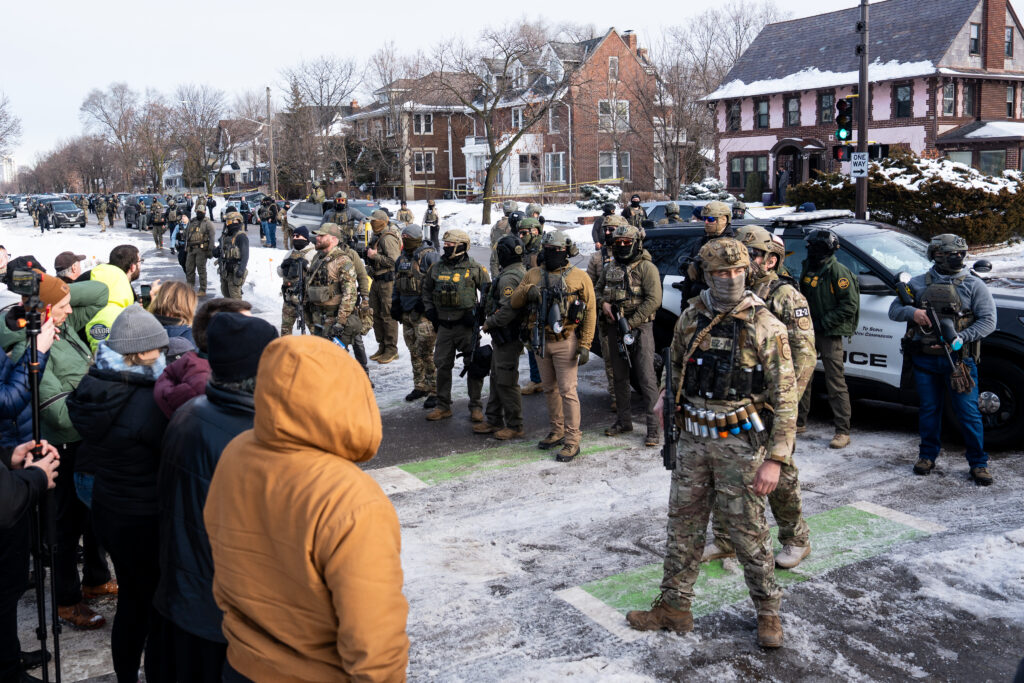
“My friends from my [high school] soccer team were posting videos of ICE agents surrounding their school on their Snapchat stories,” Schramm said. “At that point, it no longer felt like this distant thing that I could separate from.”
Schramm said leaving her home state has been difficult, especially while a place she loves is continuing to experience pain.
“It’s been a lot harder than I anticipated,” she said. “I feel like it is all I can think about, and I’m consistently bringing it up with people because we should be talking about it — a lot of people’s lives are being changed right now.”
Greta Sollie, a second-year English literature and Spanish double major, also from Minneapolis, is studying abroad in Spain and said that being away from home has been challenging as well.
“It was really weird leaving home. It felt like Minnesota as a whole, but Minneapolis specifically was a different city,” Sollie said in a text message interview. “There were less people going out and doing things, restaurants were either closed or had their doors locked, having to let people in individually so ICE couldn’t just barge right in.”
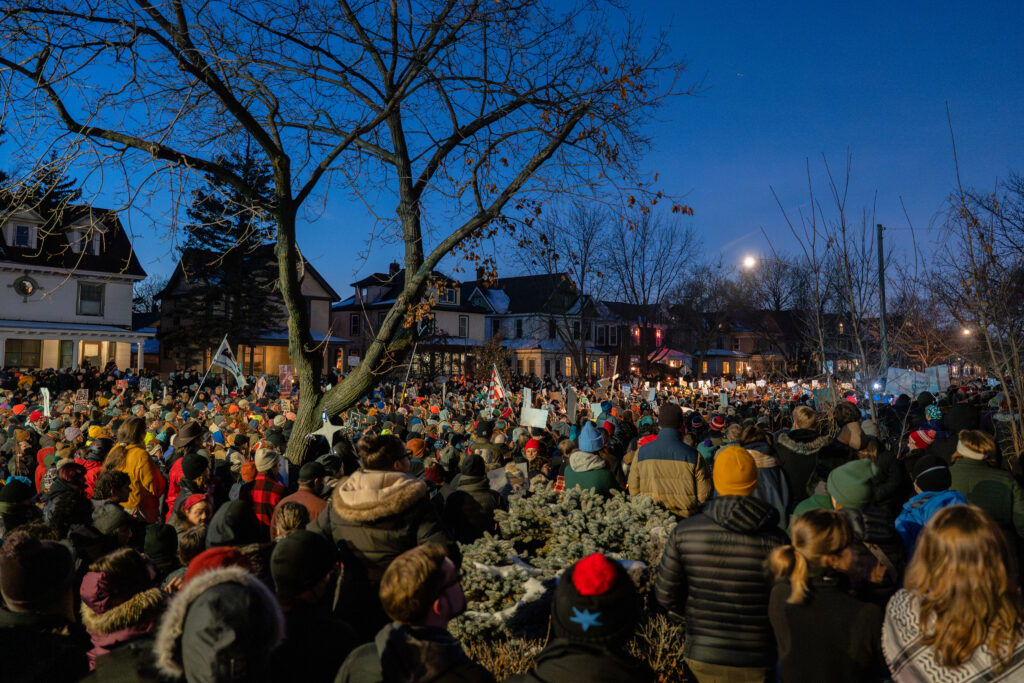
Despite the anger she feels on behalf of her community, Sollie said that she is proud of how her neighbors have come together. She said she has seen people peacefully protest, hold vigils and walk-outs, grocery shop for those afraid to leave their homes, and donate to people who are scared to go to work.
“Even in a state that is being torn apart, we are still able to come together,” Sollie said. “There is beauty not just in our landscape, but in the people and in the bonds that hold us all together.”
But Victoria Collins, a fourth-year psychology major from Eden Prairie, Minn., said that she doesn’t know anyone directly involved with the protests.
Collins said navigating the media landscape has been difficult, and that she is cautious when consuming news, considering how events may be framed by outside sources.
Schramm said it feels like there is a lot being left out of the news, saying that the outlets are failing to grasp the tragedy, loss and confusion her state is feeling, while Sollie said that national outlets are not representing the depth of what is happening.
“It is so much worse than the national media is making it out to be,” Sollie said. “People are staying hidden in their houses out of fear, schools are moving to virtual learning, hospitals are being invaded by ICE and even members of Native American tribes are being held hostage.”
Maria Voss, a political science professor at PLNU, said that the current political violence can lead to confusion.
“Throughout the country, but especially in Minneapolis, people are seeing the violence of the state in the way many haven’t before, so people might now know how to react,” Voss said.
Collins said that her Christian faith and family have helped equip her to have difficult conversations about serious subjects.
“I find that the faith that I share with my family has been especially helpful to our conversations and my views on everything occurring at home right now,” she said. “My family and I do our best to view everything through a faith-based and Biblical lens, and these intense and controversial topics are no different.”
As Collins navigates the politically polarized conversations, she said that the love of her home remains the same.
“There is no specific reason why I love Minnesota. It is much more a feeling that you can’t seem to describe to those who haven’t been,” Collins said. “It’s home. I’m proud to be from Minnesota, and I’m proud to be an American.”
