

As we rounded the final switchback, we looked toward the path ahead, or what we could make of it. It was something these boulders, and their usual crowds, rarely experience: complete isolation.
About two weeks before winter break, I bought a ticket to visit my roommate in her hometown of Pleasanton, Calif. While touring the small town was a plus, the real draw of the trip lay two and a half hours beyond it. A place I’ve called “my dreamland” for years: Yosemite National Park.
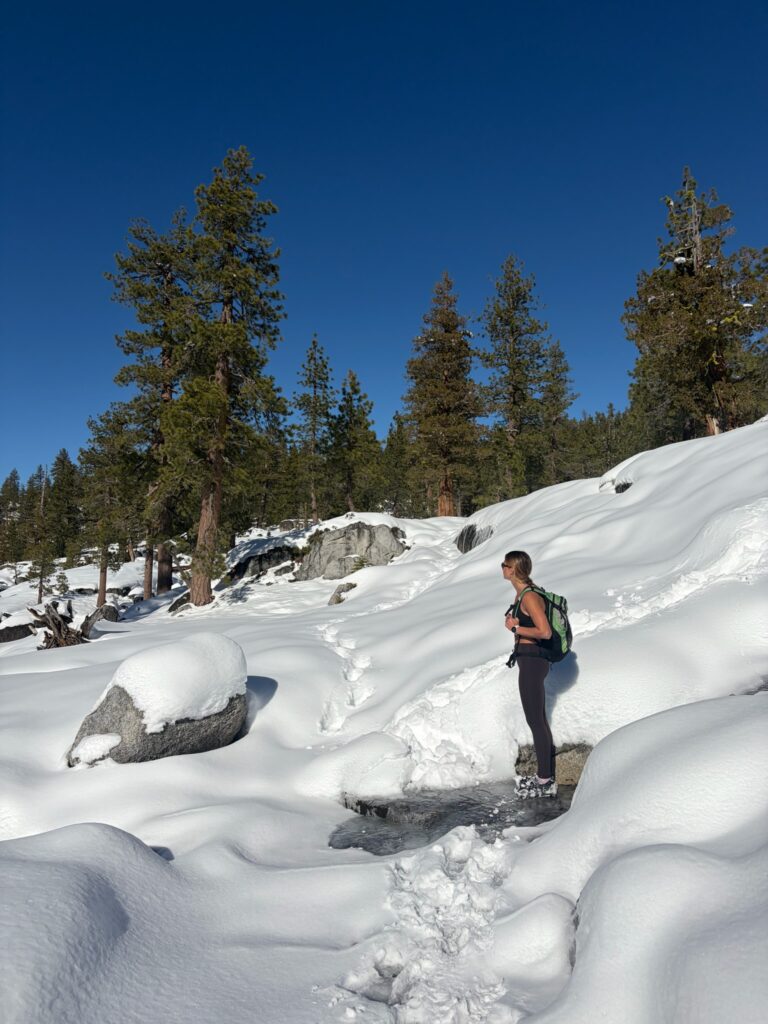
I’d seen many photos of the park from plenty of different angles, but the anticipation only continued to build for the day I could see the landscape in real life.
The park stretches about 748,000 acres, filled with waterfalls, meadows, valleys, granite domes, sequoias and wildlife that you hope to see for the sake of your bucket list, but not your safety.
According to the National Park Service, Yosemite reels in over four million visitors each year, the majority visiting during its peak months from March to November. From stories I had heard, this also meant crowded parking lots, busy trails and trickling waterfalls from the lack of snow runoff or rain during these months. I didn’t yet understand what the difference would feel like, but my first visit, occurring in January, would be one out of the ordinary.
With knowledge of a storm before our arrival and fresh snow on the ground, we prepared for our trip with warm clothes, extra layers and the most valuable item we packed: snow spikes.
As we drove into the park, the rangers told us a few cautionary tales of icy roads and trails, and confirmed our car would be equipped if the weather conditions worsened. From there, we were in.
The shock set in as the valley appeared. One minute, we were driving in a forest of snow-topped trees, and seconds later, I was seeing mountains and boulders I had only seen through a screen. Bridal Veil Falls gushed water on the right side of my gaze as the infamous El Capitan stood immovable, with clouds drifting around it.
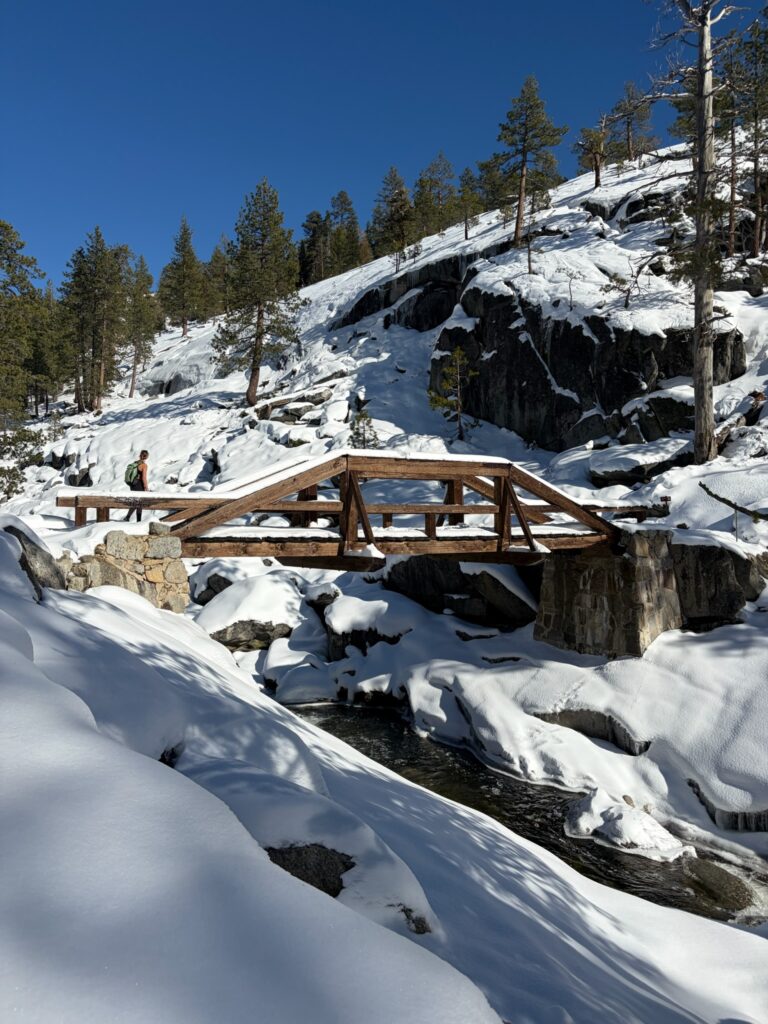
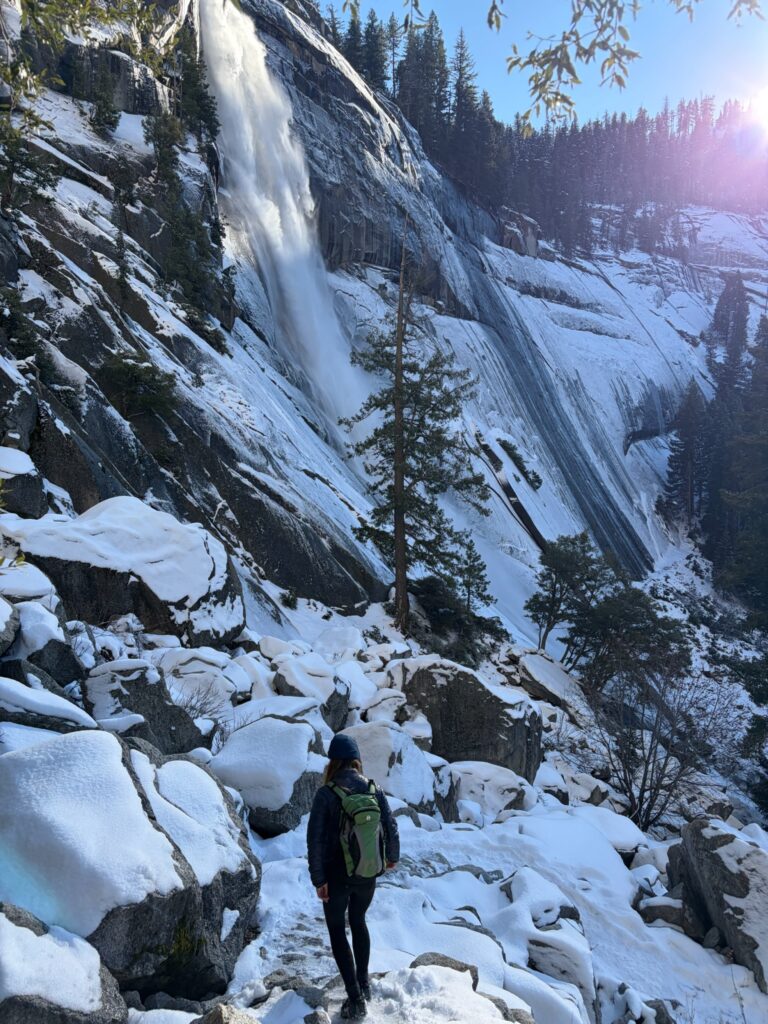
This first image, as well as our hike to the top of roaring Nevada Falls, is one I won’t forget. Still, the rarity of the experience truly sank in on our second day in the park as we hiked the trail to North America’s tallest waterfall, Upper Yosemite Falls.
The trail totals 7.2 miles round-trip of switchbacks that lead to the falls. From the top, there are options to go beyond this viewpoint, the one we chose being Yosemite Point, adding an extra 1.3 miles to our hike.
As we started the hike, the trail conditions were manageable as most of it was sun-exposed, melting the snow and ice and leaving us with just dirt.
A mile later, the ice patches increased, we began to slip in our regular hiking shoes, and the few people we came across on the trail started to turn around.
We pressed on until we reached about a half-mile from the top of Yosemite Falls, where we met one hiker racing down.
“You guys got snow spikes, right?” he said, looking concerned. We eased his mind with the reply that we did, which then led him to explain the experience we were about to have.
“It’s beautiful, and no one is up there. Enjoy.”
A few simple words, but enough for us to get our spikes on and race up the rest of the incline.
As we rounded the final switchback, the lingering words of the bypassing hiker couldn’t do it justice. Absolute serenity filled the air.
Only one pair of footprints crushed the fresh snow and directed us on where to go; animal tracks imprinted the untouched powder around us, and the potential of a quick, passing hiker coming from behind us seemed impossible.
We trekked beyond this marker to Yosemite Point. Some steps sank us into waist-deep snow, while others led us completely off the trail. It seemed like we had traveled somewhere completely different in those few miles. Somewhere beneath the snow, without a single boulder underfoot, was granite.
When we reached the end of the trail we had helped carve, knee-deep in fresh snow, Half Dome stared at us empty, covered only by a soft layer of snow and left untouched for a few quiet months each year.

 Carson Dillon