

Editor’s Note: This article contains language of sexual abuse. Please take care while reading.
An investigation that spanned nearly five years by the New York Times revealed last week that Cesar Chavez, the celebrated and highly esteemed Mexican American labor leader and civil rights activist, sexually abused numerous women and young girls during the 1960s and 1970s.
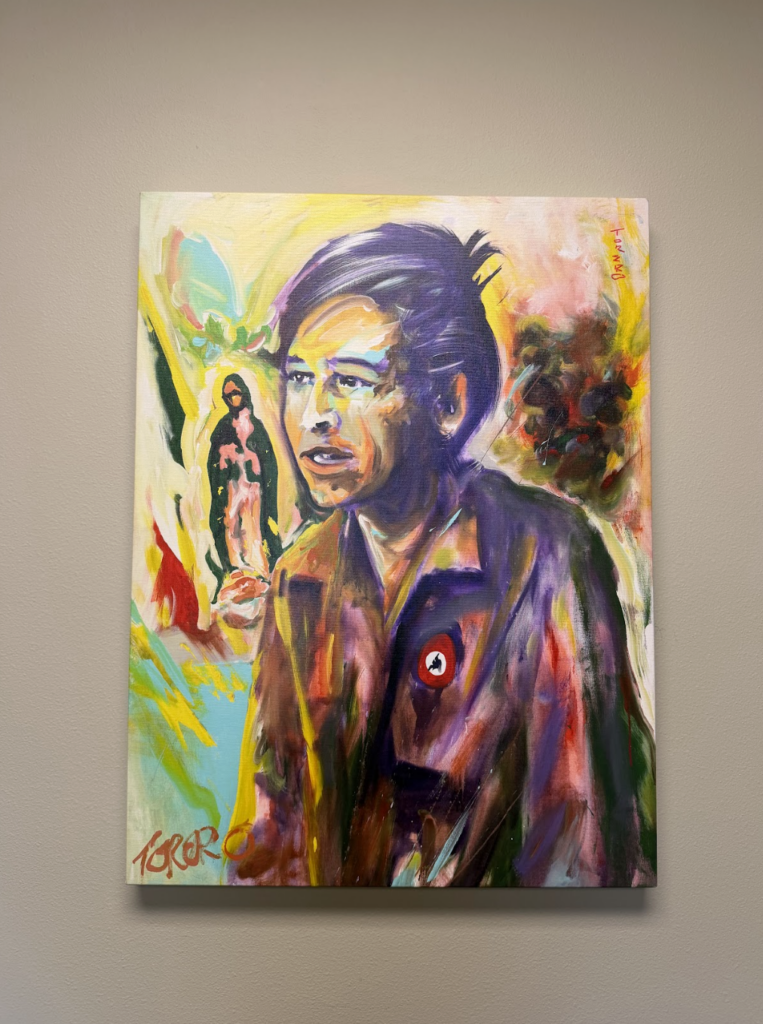
Dolores Huerta, a civil rights icon and United Farm Workers co-founder with Chavez, recently stated that she was sexually assaulted and raped by Chavez twice in the 1960s. Now 95, Huerta said she remained silent for decades to protect the farmworker movement as she hid two pregnancies from the public.
The New York Times investigation primarily identified two women who were abused as minors, and numerous others who were adult volunteers during the movement. The two young girls were identified as Ana Murguia and Debra Rojas.
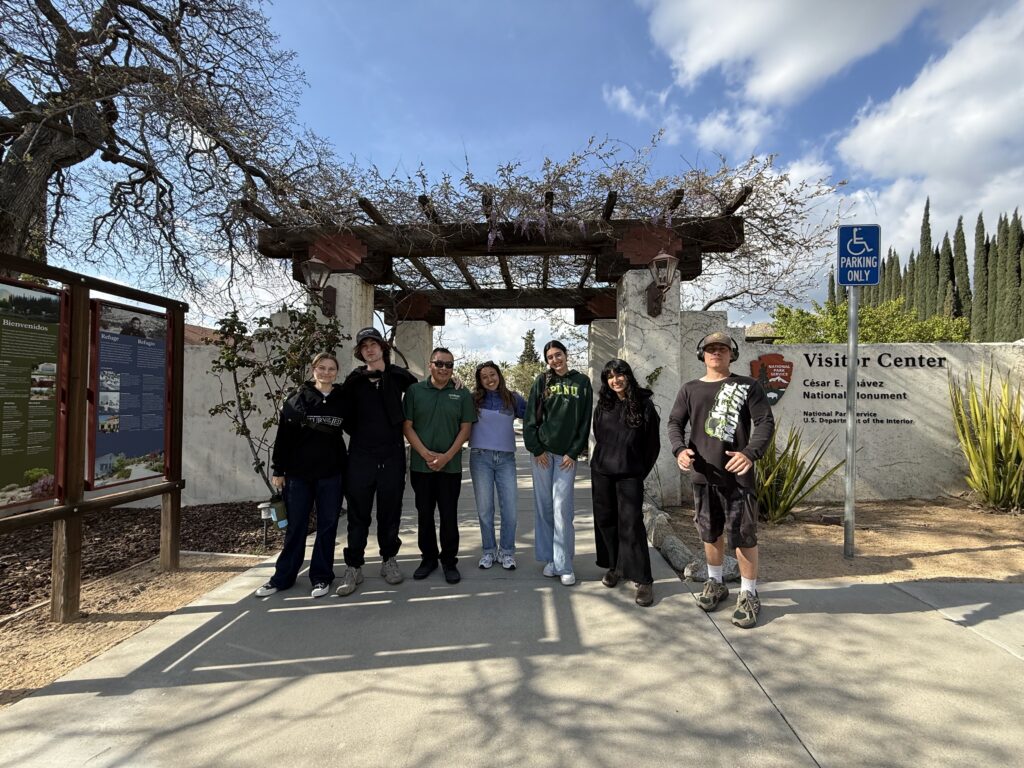
Just days after students and staff from Point Loma Nazarene University returned from a spring break Civil Rights Pilgrimage — where they studied the life and legacy of Chavez and his role in advancing farmworker rights — the narrative surrounding the leader has shifted dramatically.
Ceci Corona, a fourth-year international development major and attendee of the Civil Rights Pilgrimage, said she first learned about the allegations when a classmate sent the news to a group chat.
“I just could not believe it,” Corona said. “We just left his museum, celebrating him and learning of all the great things, and then there’s so many stories coming out now.”
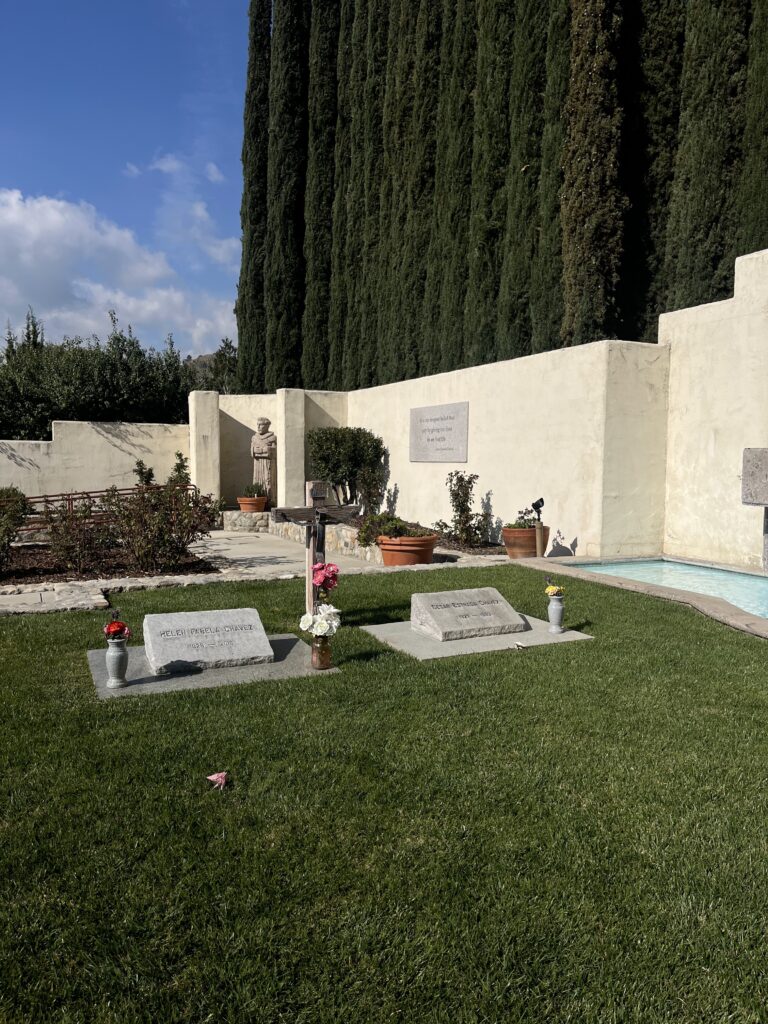
The Civil Rights Pilgrimage is a semiannual, week-long trip held during PLNU’s spring break that allows students and faculty to experience historical sites connected to civil rights movements across the country. This year’s pilgrimage focused on historic locations throughout California, including the Cesar E. Chavez National Monument — the location of Chavez’s home, office, library, personal artifacts and burial site. Corona said her experience at the monument was tainted once she learned the truth about Chavez’s hidden life.
“I remember being on the grounds and in the moment, I was like, ‘Oh my gosh, this is beautiful. People were here. This is so real,’” Corona said. “It feels a lot more tangible. And then when we got back, and I learned everything, it flipped.”
Payton Duncan, a first-year criminal justice major who also attended the pilgrimage, had a similar reaction to the allegations.
“Reading the news, especially after going on the pilgrimage and seeing his museum, was shocking,” Duncan said in an email interview. “It made me very angry that justice wasn’t brought to the women sooner, but it also just proved that the ‘goodest’ of people can commit the most heinous acts.”
In response to allegations against Chavez, communities and institutions across the country are taking action. California lawmakers unanimously passed Assembly Bill 2156, officially renaming the March 31 Cesar Chavez state holiday to Farmworkers Day. Observances of Cesar Chavez Day have been canceled in several states, school districts are renaming buildings and cities are renaming streets, notably Cesar Chavez Parkway in San Diego.
“I felt so proud of the community for holding him accountable, supporting [Huerta] and responding quickly,” Corona said.
Jimiliz Valiente-Neighbours, a PLNU professor of sociology and faculty member who led students on the Civil Rights Pilgrimage, said it’s important to consider all matters as intersectional, and that Chavez’s wrongdoing should not simply be attributed to his personal life.
“His actions impacted and continue to impact the greater community, which is why institutions, such as Cal State San Marcos, have taken down statues of him,” Valiente-Neighbours said in an email interview. “I can understand how leaving up his statue would communicate to women, ‘your pain does not matter.’”
Corona said she is grateful for and feels empowered by the Mexican American history at the Cesar Chavez museum, but learning about his abuse has caused tension for her. Despite that, she’s reminded that movements are not successful because of one person.
“The movement itself was from community contribution,” Corona said. “He was not the only leader. It goes way deeper than that, and I can still hold the movement while not holding his personal values, which he didn’t seem to even uphold.”
Duncan echoed this, saying it’s important that people do not forget the importance of the farmworker movement because of the wrongdoing of one person.
“We must now focus on the community, as well as the women survivors, of the Farmer’s Worker Union, and that’s how it should have been in the first place,” Duncan said.
As the instructor of the course, California Civil Rights Pilgrimage, Valiente-Neighbours said she has been asked if or how she will change the way she leads students through the history of Cesar Chavez and the farmworker movement.
“I will continue to teach about the UFW in the way that I have, and that it has always been a collective movement,” she said.
Corona said that, with PLNU being a Christian university among a large community of Mexican Americans, students and faculty should be more diligent in acknowledging both Chavez’s Christian faith and fasting as well as his sin and sexual abuses against women.
“I think chapel has a huge place of influence here,” Corona said. “It’s a place where most of [the] students have to come and where they can gather together. I think it would be really powerful if they used that influence to talk about the hard things.”
Valiente-Neighbours echoed this call for accountability and said it’s important to remember our vulnerability to sin, even as Christians.
“I would like students to remember that, as Christians, we are not immune to committing grave mistakes and that we must always ask our community members to hold us accountable, to take responsibility for when we hurt others and to commit to changing our behaviors to stop the harm,” she said.

 Ava Bailey-Klugh