

Editor’s Note: The opinions expressed in this article do not necessarily reflect those of The Point. Margarita Pintado Burgos is a professor of Spanish at Point Loma Nazarene University. Born and raised in Puerto Rico, she received her bachelor’s degree in communication from the University of Puerto Rico. After moving to the United States, she obtained her doctorate in Spanish.
Bad Bunny being chosen to perform during the Super Bowl halftime show is proof that we still live in a democracy (knock on wood). It’s no secret that, if the current administration had any say, the Puerto Rican superstar would never have made it to the coveted stage. His participation is a landmark achievement given the relentless efforts from the White House to criminalize anyone who isn’t white and doesn’t speak English, or who speaks it “badly.”
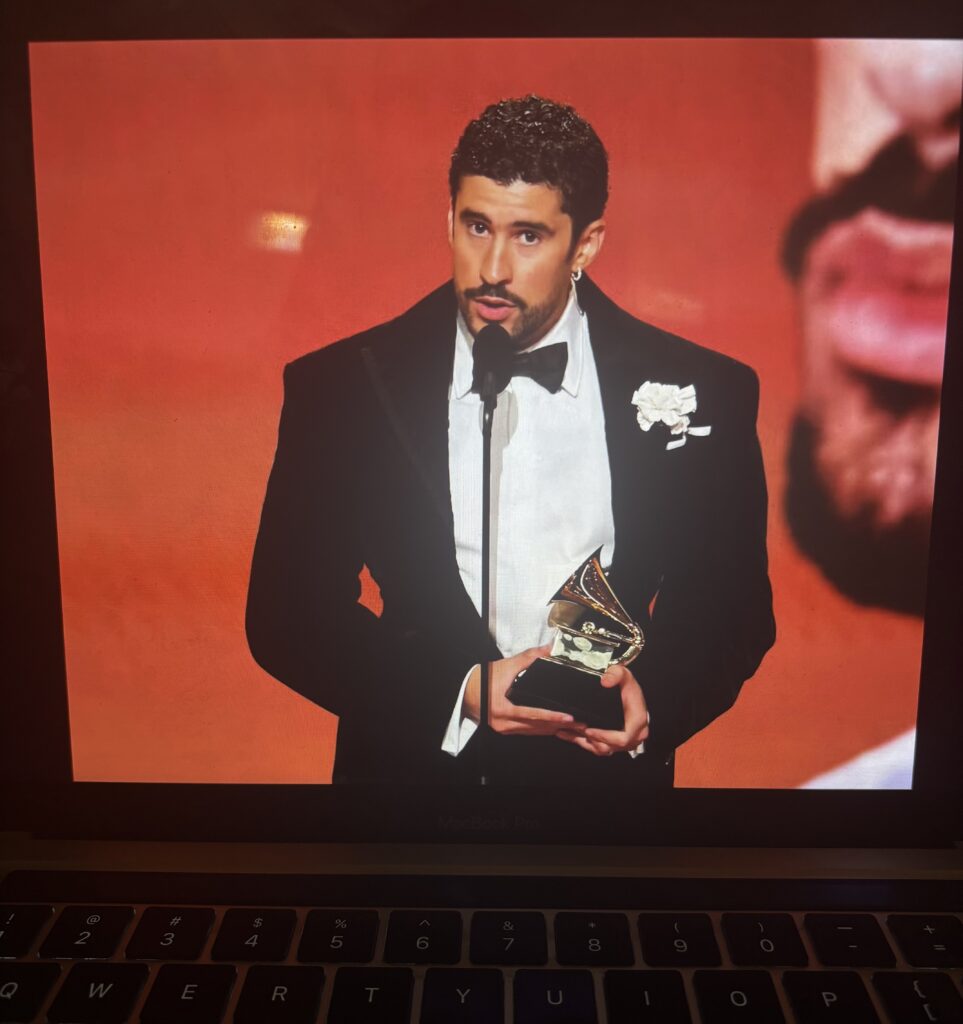
Having received a historic Grammy a week before the Super Bowl with an album entirely in Spanish dedicated to his country, a twice colonized island, Benito Antonio Martínez Ocasio demonstrated that it’s possible to be a big star in a language other than English.
His commitment to Spanish doesn’t stem from hatred or resentment, but from the firm conviction that we are better people and artists when we offer our authentic selves and not a version designed to fit someone else’s expectations.
That’s precisely what makes Bad Bunny a threat to those who try to make us believe that the only way to succeed in the world, and more specifically, in the United States, is through total assimilation, erasing the history of our ancestors, diluting ourselves until we lose our roots, our sacred essence.
What bothers some about Bad Bunny is that he never bought into the narrative of his supposed inferiority; that after he saw and tasted what was supposedly more desirable, he insisted that what he has was better.
At one point during his Super Bowl performance, the 31-year-old artist, son of a truck driver and a Spanish teacher, said, “Esto que estás oyendo es música de Puerto Rico … música del barrio y del caserío.” In English, “What you’re hearing is music from Puerto Rico … music from the barrio and the housing projects.” The music of poor people, who, despite their poverty, possess no less talent, grace, style, intelligence, as well as a hunger and a right to succeed.
Bringing the periphery to the center and suddenly turning it into a mainstream product is one of the reasons for Bad Bunny’s success. Daring, in his case, to be proud of a history and a culture – the Puerto Rican one – that has been seen as inferior not only by our neighbors to the north but also by our Latin American neighbors.
The Caribbean is something else entirely: We speak flawed Spanish; we are less civilized; we dance vulgarly; we exude too much sensuality; we are too loud, too proud, too much! If only people could understand that when people have been oppressed, abused, displaced, erased, the body becomes a trench and dance a survival strategy. And yes, shaking your hips and rear is a celebration of life, because, like Bad Bunny said right at the end of his show: “Seguimos aquí.” In English: “We are still here.”
Against all odds, still here. Still beautiful, still sensual, still dancing, still smiling. Because we are not defined by how others see us, because we have a right to exist on our own terms, without subtitles. And this is what Bad Bunny reminds us of every single time: That we are enough; that we too have a lot to offer; that maybe it’s they who should learn from us for a change.
At the end of the day, what the Super Bowl also demonstrated is that there are things that transcend language. That it is possible to feel love, empathy, joy and patriotic pride in harmony with others who are different from me. What unites us is our shared humanity and our yearning for a better future for all.

 Olivia Roberts